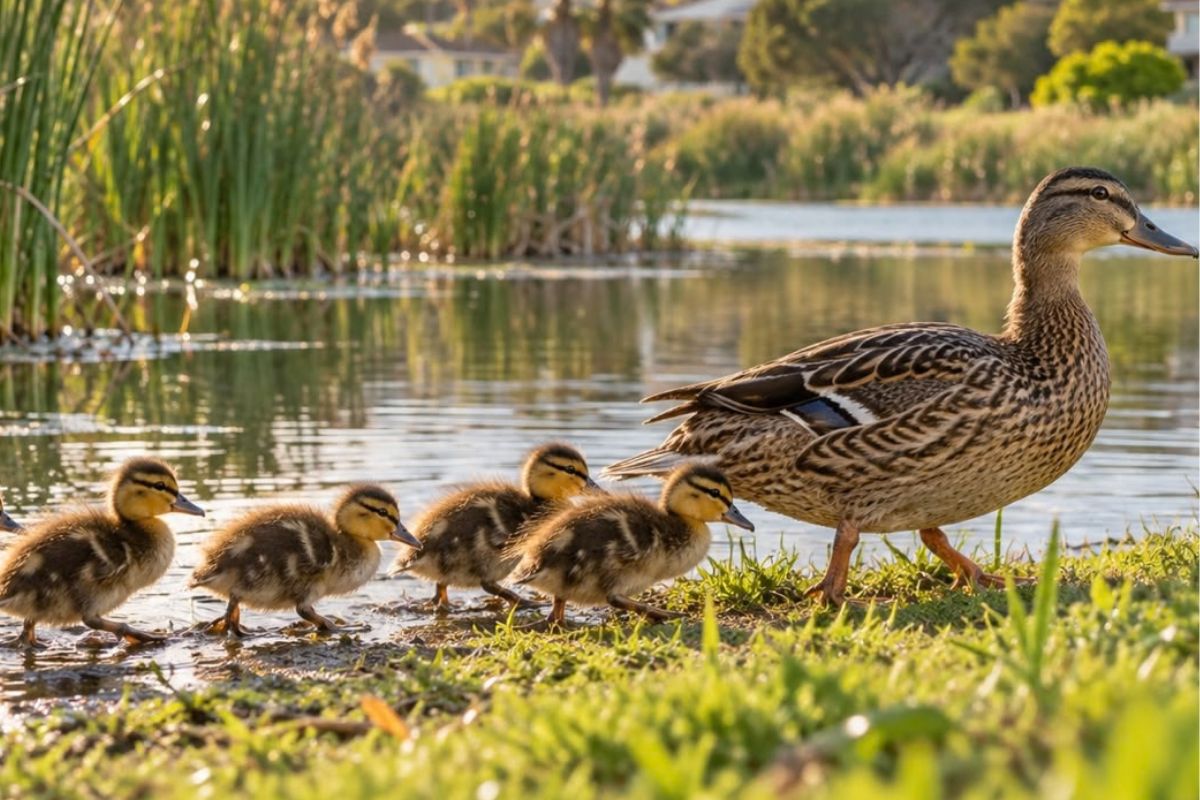
Duck breeding season: Why you’re spotting more ducklings lately
Late winter and spring bring a wave of ducklings to South African ponds and dams, but the timing depends heavily on where you live.





If your local pond suddenly seems busier, you’re not imagining it. Across much of South Africa, late winter and spring mark the start of duck breeding season, with fluffy broods trailing behind their mothers on dams, vleis and the odd suburban swimming pool.
The timing isn’t uniform, though. Our breeding calendar follows the rain rather than a neat spring timetable, so a duckling in the Western Cape and one on the Highveld could hatch months apart. Some local species will breed in almost any month when conditions suit them.
Two familiar faces lead the charge. Egyptian geese and yellow-billed ducks together account for a large share of breeding records in the three Cape provinces, which explains why they’re the birds most likely to march a family across your driveway.
Duck breeding season depends on where the rain falls
In the winter-rainfall Western Cape, most duck species are reproductively active in late winter and spring. In summer-rainfall provinces such as Gauteng, activity peaks later in the year. The South African shelduck shows this neatly, with breeding peaking later the further south it nests.
Duck breeding season brings an invasive problem
Not every duck on the pond is welcome. The invasive mallard interbreeds with the indigenous yellow-billed duck, and conservationists have long warned that these hybrids threaten the local species. Releasing unwanted domestic ducks into public dams only makes the problem worse during the breeding months.
How to help ducklings without doing harm
Mothers lead newly hatched ducklings to water almost immediately, sometimes across busy roads or into garden pools they can’t climb out of. A floating plank or ramp can save a brood. Skip the bread, and contact an animal welfare group near you if ducklings seem abandoned.
There’s something about a row of ducklings wobbling after their mother that stops even the most rushed commuter in their tracks. This season I’ll be keeping an old plank next to the pool, just in case a feathered family decides to drop in uninvited.