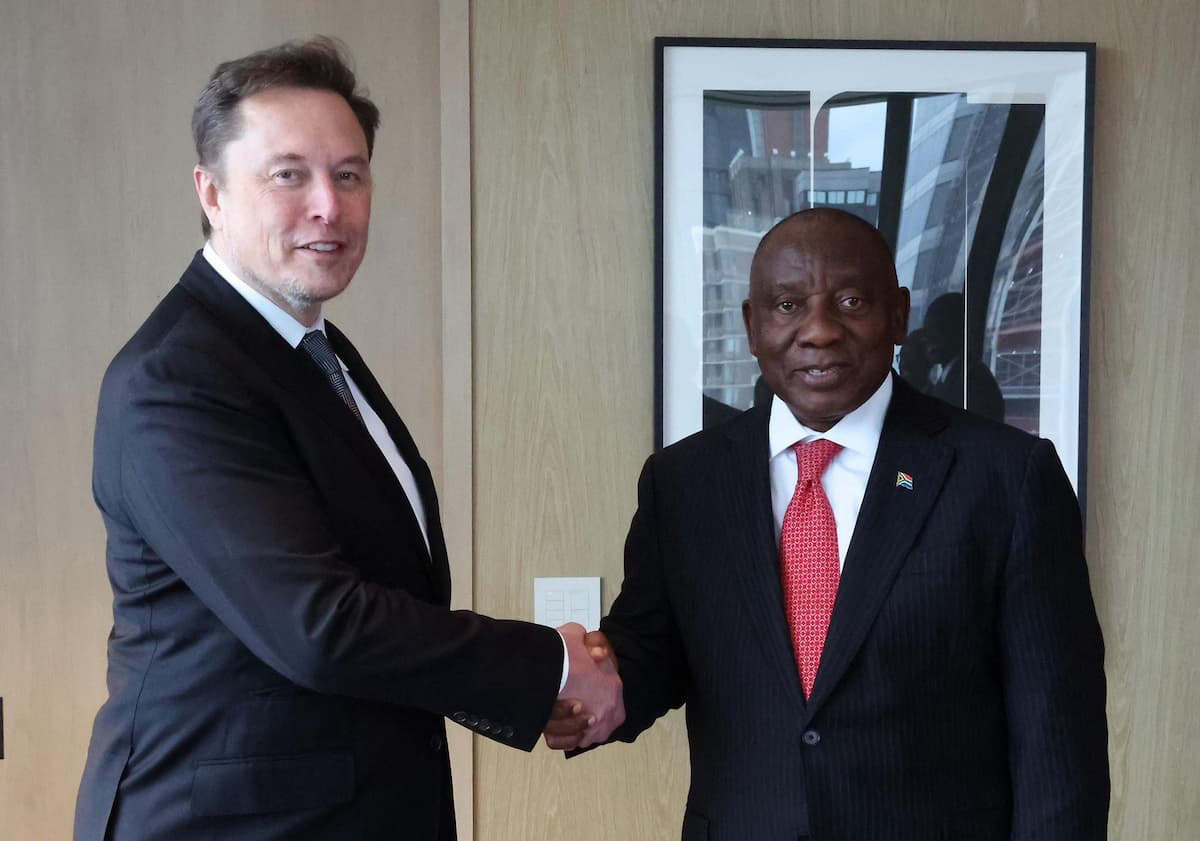
Starlink deadlock: South Africa extends olive branch to Elon Musk
As Starlink remains stalled over ownership rules, Mondli Gungubele urges Pretoria-born Elon Musk to compromise and invest.





Deputy Minister of Communications and Digital Technologies Mondli Gungubele has appealed directly to Pretoria-born tech billionaire Elon Musk to compromise and work with the South African government to launch his Starlink satellite internet service locally.
Addressing a Bloomberg event near Cape Town on Monday, Gungubele urged the SpaceX founder to assist in narrowing the country’s severe digital divide.
“I hope Elon is listening,” Gungubele said, questioning whether Musk could accept 30% local equity requirements given the massive potential yields.
Asking if the former trillionaire could work with Pretoria to minimise inequality, the deputy minister confirmed that official engagements between government and Starlink remain ongoing. High-speed low-Earth orbit satellite coverage would transform connectivity for rural communities.
Is an EEIP compromise possible?
Starlink’s domestic deployment has been stalled by the Electronic Communications Act, which mandates 30% ownership by historically disadvantaged groups.
The Independent Communications Authority of South Africa (ICASA) in May 2026 rejected policy directions from Communications Minister Solly Malatsi to introduce equity equivalent investment programmes (EEIPs), insisting that substituting ownership requirements requires a formal legislative amendment by Parliament.
The impasse sparked sharp political fallout, with Musk labelling South Africa’s empowerment laws “openly racist” and alleging bribe attempts, prompting President Cyril Ramaphosa’s spokesperson Vincent Magwenya to tell him to “move on” after a heated social media exchange.
However, writing in an op-ed on 29 September 2026, United States Ambassador to South Africa, Leo Brent Bozell, urged Pretoria to allow American telecommunications firms to participate in EEIPs to attract “desperately” needed foreign investment.
Can Starlink navigate rival pressure and regional hurdles?
While political opponents branded Starlink a national security threat, rival Amazon Leo outmanoeuvred SpaceX by partnering with domestic provider Herotel to launch consumer satellite broadband by 2027.
By utilising Herotel’s local licence, Amazon complied with equity rules. Globally, Starlink faces a licence rejection in Namibia and military threats in Iran, despite securing operating agreements in Uganda and Lesotho.
Gungubele reiterated that South Africa remained eager to resolve the regulatory stalemate through constructive dialogue, hoping Musk would ultimately choose to invest in the country of his birth.