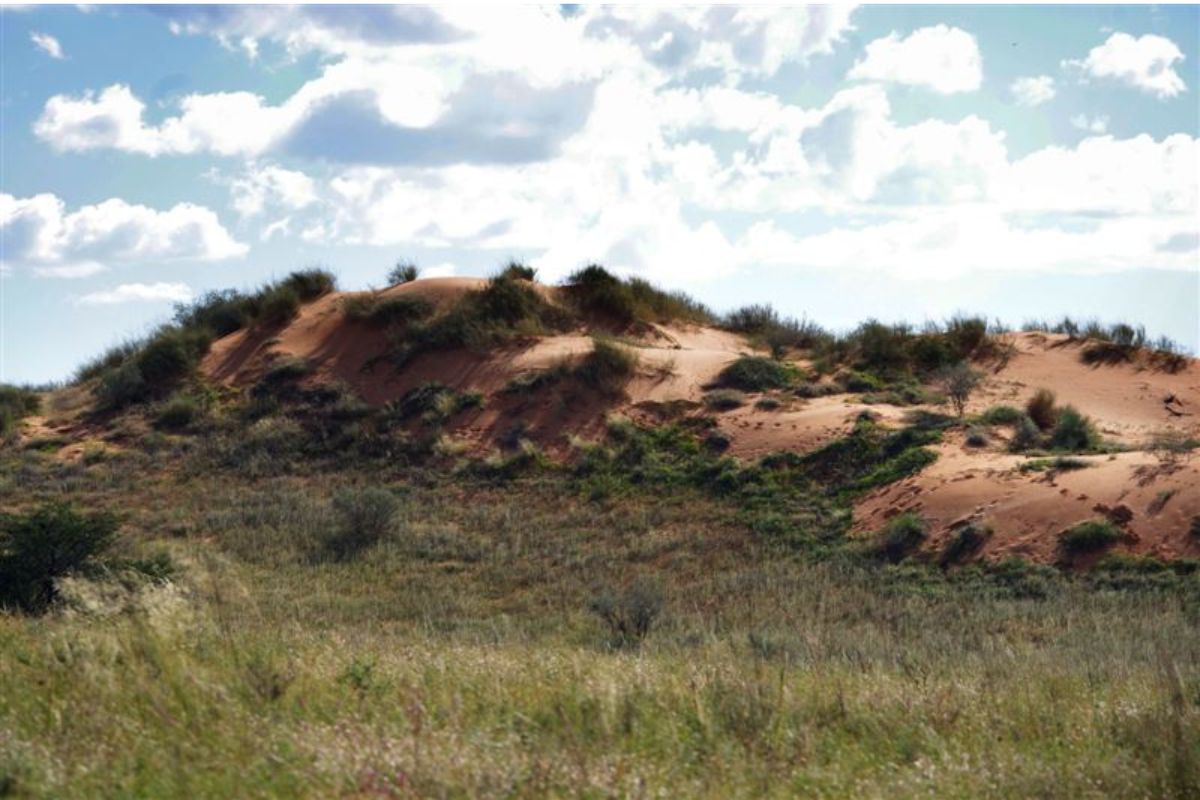
Deserts get new defence against desertification in Southern Africa
New funding will help Southern Africa fight desertification, restore land and protect livelihoods across the Kalahari and Namib Deserts.





Deserts are getting a new defence against desertification in Southern Africa.
For people living with dry landscapes, good news can start with protecting the soil beneath their feet.
A new $3.98 million grant will support a regional push to slow desertification in the Kalahari and Namib Deserts. The Global Environment Facility approved the grant on 11 June 2026 for the African Development Bank’s Southern Africa Great Green Wall Accelerator.
The three-year project will involve all 16 SADC member states.
WHAT IS THE GOOD NEWS FOR THE DESERTS?
The funding will help create a regional system for coordinating restoration projects and attracting further investment.
The United Nations Convention to Combat Desertification’s Global Mechanism will execute the project with SADC countries. The African Development Bank will act as the GEF agency.
The programme will develop a costed Great Green Wall investment plan for Southern Africa. It will also build a pipeline of projects that can attract financing. The six focus areas are water access, renewable energy, resilient ecosystems, climate-resilient infrastructure, sustainable agriculture and resilient food systems, and inclusive economic development.
This matters because desertification does not mean a desert simply spreading. The UNCCD defines it as land degradation in dry areas caused by climate variations and human activities. Overcultivation, overgrazing and deforestation are among the main pressures identified in SADC’s regional action programme.
WHO BENEFITS FROM THE DESERTS PROJECT?
The intended beneficiaries are not only plants and wildlife. Farmers, livestock owners, rural businesses and communities depend on productive land and reliable water.
Restoring landscapes can help protect livelihoods while strengthening ecosystems against drought.
There is evidence that the Great Green Wall approach can deliver economic benefits. In the Sahel, projects had restored almost 20 million hectares and created more than 350 000 jobs by 2020, according to UNCCD reporting. The initiative has also shifted from a narrow tree-planting concept towards broader landscape restoration and rural development.
WHAT CAN WE DO TO STOP DESERTIFICATION?
Southern Africa cannot solve land degradation by planting trees alone. Restoration needs locally suitable vegetation, better grazing management, soil protection and careful water management.
UNCCD guidance includes windbreaks, agroforestry, sustainable livestock management, improved water management and erosion control.
The new programme can help turn those methods into coordinated, investable projects across borders. That regional approach matters because drought, food insecurity and land degradation do not stop at national boundaries.
Southern Africa also has a strong economic reason to act. SADC says drought events have increased across the region. Current climate shocks are placing pressure on livelihoods and food security.
Protecting productive land therefore means protecting food supplies, rural incomes and water resources. The Great Green Wall is not a literal wall of trees. It is a landscape restoration strategy.
For Southern Africa, this new funding offers a chance to make that strategy practical, coordinated and measurable before more land loses its productivity.