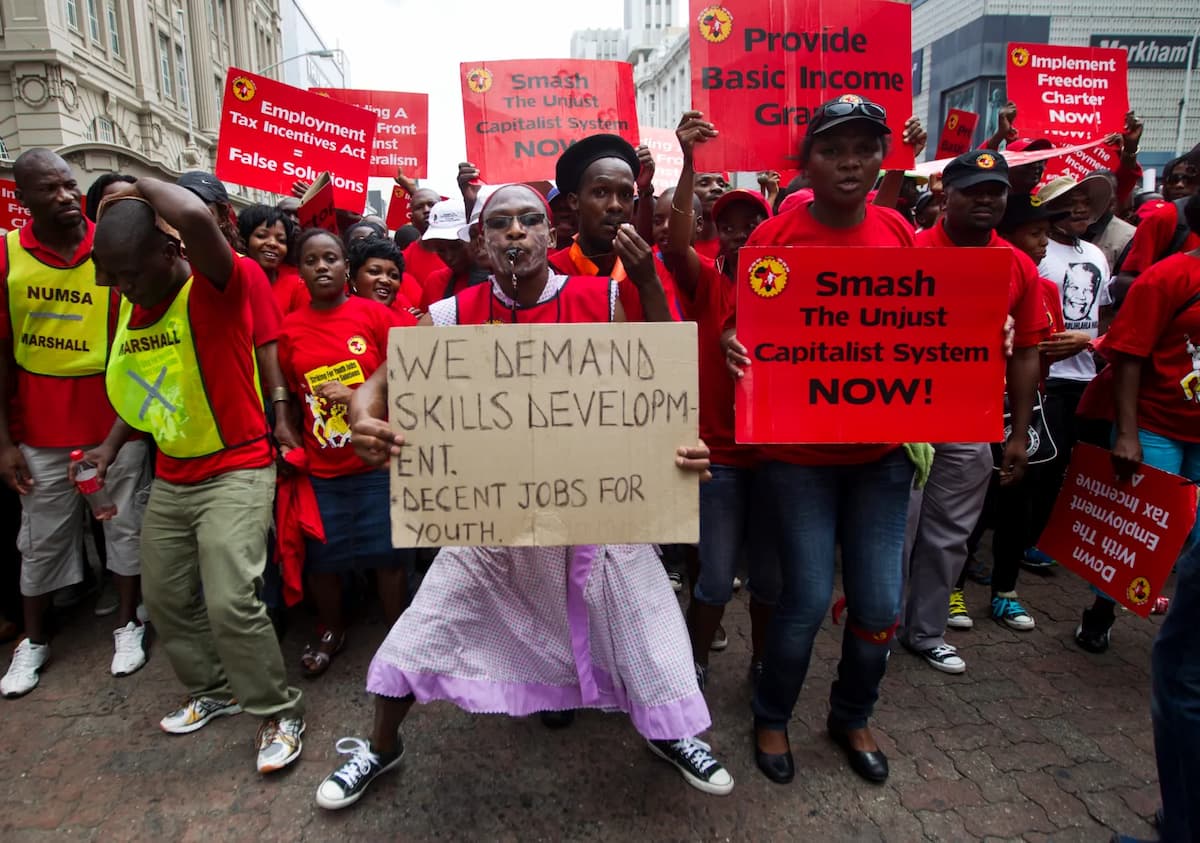
South Africa’s job crisis worsens as one province approaches 50% unemployment
South Africa’s official unemployment rate has increased to 33.6%, led by a brutal spike in one struggling province.





South Africa’s job market has suffered another blow as the national unemployment rate climbed to 33.6% in the second quarter of 2026, with unemployed persons rising by 345 000 to reach 8.5 million.
This national increase is underpinned by a deep-seated crisis in the Eastern Cape, where nearly half of the labour force is now without work.
As reported by Statistics South Africa (Stats SA) in the Quarterly Labour Force Survey, the Eastern Cape official unemployment rate surged to 47.5% between April and June 2026. This represents a quarter-on-quarter jump of 2.9 percentage points, up from 44.6% recorded in the first quarter of the year.
Historically a drag on national employment, the province has shed 116 000 jobs year-on-year since the second quarter of 2025, underlining a widening regional economic divide.
On an industrial level, employment declined in seven of South Africa’s ten industry sectors. The community and social services sector led the job losses, shedding 57 000 positions, followed closely by mining, which dropped 26 000 jobs.
Year-on-year, manufacturing and community services were the hardest hit, losing 100 000 and 101 000 jobs respectively, while trade and construction experienced quarterly growth.
In contrast to the national decline, the Western Cape remains the strongest performer in South Africa. The province recorded an official unemployment rate of 19.5% in the second quarter of 2026, dropping 0.1 of a percentage point from the previous quarter.
Year-on-year, the region decreased its unemployment rate by 1.6 percentage points. The City of Cape Town recorded a 21.9% unemployment rate, while non-metropolitan areas registered a lower 14.5%.
Nationally, the formal sector contracted by 41 000 positions over the quarter, though the informal economy expanded by 34 000. The broader labour underutilisation rate (LU4), which accounts for underemployed and discouraged workers, remained stagnant at 46.3%.
Youth aged 15 to 24 years continue to bear the heaviest burden, with their official unemployment rate rising to 62.8% this quarter, while 36.4% of this cohort are not in employment, education or training.
Additionally, the data highlights persistent inequalities across gender and racial lines.
The official unemployment rate for women climbed to 37.5%, compared to 30.3% for men. Black or African South Africans faced the highest official unemployment rate at 37.6%. This is in sharp contrast to Indian or Asian communities at 14.7% and White South Africans at 9.1%, illustrating that social justice remains far from realised in South Africa’s unequal job market.
South Africa’s unemployment breakdown, by province (Q2 2026)
Below is a sequential list of each province’s official unemployment rate performance in the second quarter of 2026, ranked from the strongest performer to the weakest:
| Province | Official Unemployment Rate (Q2 2026) |
|---|---|
| Western Cape | 19.5% |
| Northern Cape | 28.7% |
| Limpopo | 32.0% |
| KwaZulu-Natal | 32.5% |
| Gauteng | 34.6% |
| Mpumalanga | 36.6% |
| Free State | 37.3% |
| North West | 38.1% |
| Eastern Cape | 47.5% |