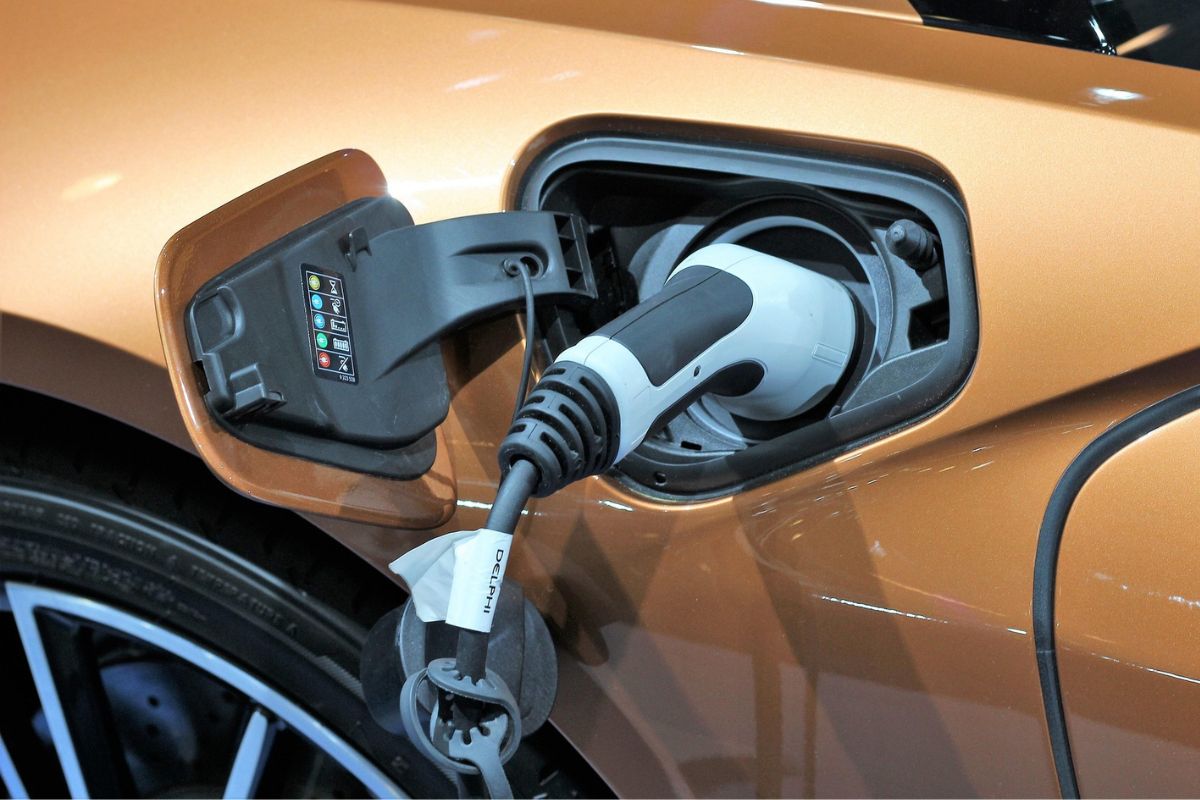
Electric cars vs petrol: How far will R1 000 take you in South Africa?
See how far R1 000 takes you in an electric car versus a vehicle using petrol in South Africa, including home and public charging costs.





Electric cars are changing one of the most familiar calculations in South African motoring: How many kilometres can you buy with R1 000?
For years, drivers have watched the fuel gauge drop and the petrol bill climb, often wondering how far the same money could take them in another type of car. Now there is a practical way to compare them.
Using current August 2026 petrol prices and electricity tariffs, we “put” R1 000 into the tank of an efficient petrol car and the battery of an affordable electric car. The result shows just how large the difference can be, while also revealing why home charging, public charging costs, maintenance and vehicle price all matter before declaring a winner.
We have calculated the comparison using South Africa’s August 2026 prices.
HOW FAR DOES AN ELECTRIC CAR GO ON R1 000?
The Geely E2 provides a useful local comparison. Its selling price starts at R339 900 and claims consumption of 15.2kWh per 100km. Its claimed range is 325km.
For this calculation, we use Eskom’s 2026/27 Homepower 4 rate of about R3.56 per kWh; thus, R1 000 buys about 281kWh. At 15.2kWh/100km, that gives roughly 1 850km with the E2.
There is an important qualification: Homepower includes fixed daily charges, plus energy-linked charges. Eskom says these fixed charges apply whether electricity is used or not. Therefore, the 1 850km figure represents the variable electricity cost, not a separate household electricity bill.
HOW FAR DOES PETROL TAKE YOU?
From 5 August 2026, inland 95 unleaded petrol costs R25.58 a litre. Inland 93 costs R25.42.
R1 000 therefore buys 39.09 litres of 95 petrol. A Polo Vivo GT uses a claimed 4.8 litres per 100km. That gives approximately 814km from R1 000 of petrol.
The difference is striking. On these figures, the E2 travels about 1 036km further than the Polo Vivo GT for the same R1 000 energy spend.
The comparison is also not between wildly different price points. A new Polo Vivo GT is listed at R363 300, compared with R339 900 for the E2.
BUT WHAT ABOUT OTHER COSTS?
Purchase price matters, and running costs do not stop at energy. Electric vehicles generally have fewer mechanical components and do not need oil changes.
Petrol cars require regular servicing, oil, filters and other engine-related maintenance.
Charging location also matters. Home charging gives the electric car its biggest cost advantage, and public charging has separate, probably higher, prices.
The wider market is moving in the same direction, though, as Naamsa reported that battery-electric vehicle sales almost doubled year-on-year during the first quarter of 2026.
For South African motorists who can charge at home, the answer is clear: R1 000 currently buys substantially more travel in an electric car than in an efficient petrol car.
But the E2’s theoretical 1 850km versus about 814km for the Polo Vivo GT is not a promise of real-world range. Traffic, weather, driving style, charging losses and air-conditioning affect both vehicles.
Still, the maths explains why more South Africans are starting to look beyond the petrol pump.