Digital IDs: How South Africa’s new identity system will work
A digital ID will bring South African identity services to smartphones, with biometric security and user-controlled information sharing.





South Africa’s proposed digital ID has moved from policy plans to a working prototype demonstrated by Home Affairs.
Minister Leon Schreiber unveiled the system in Johannesburg on 1 October 2026.
The demonstration showed how a smartphone could become a secure identity credential. It also showed how users could control what information they share during verification.
The system aims to connect identity services with wider digital government services.
WHAT FEATURES WILL THE DIGITAL ID OFFER?
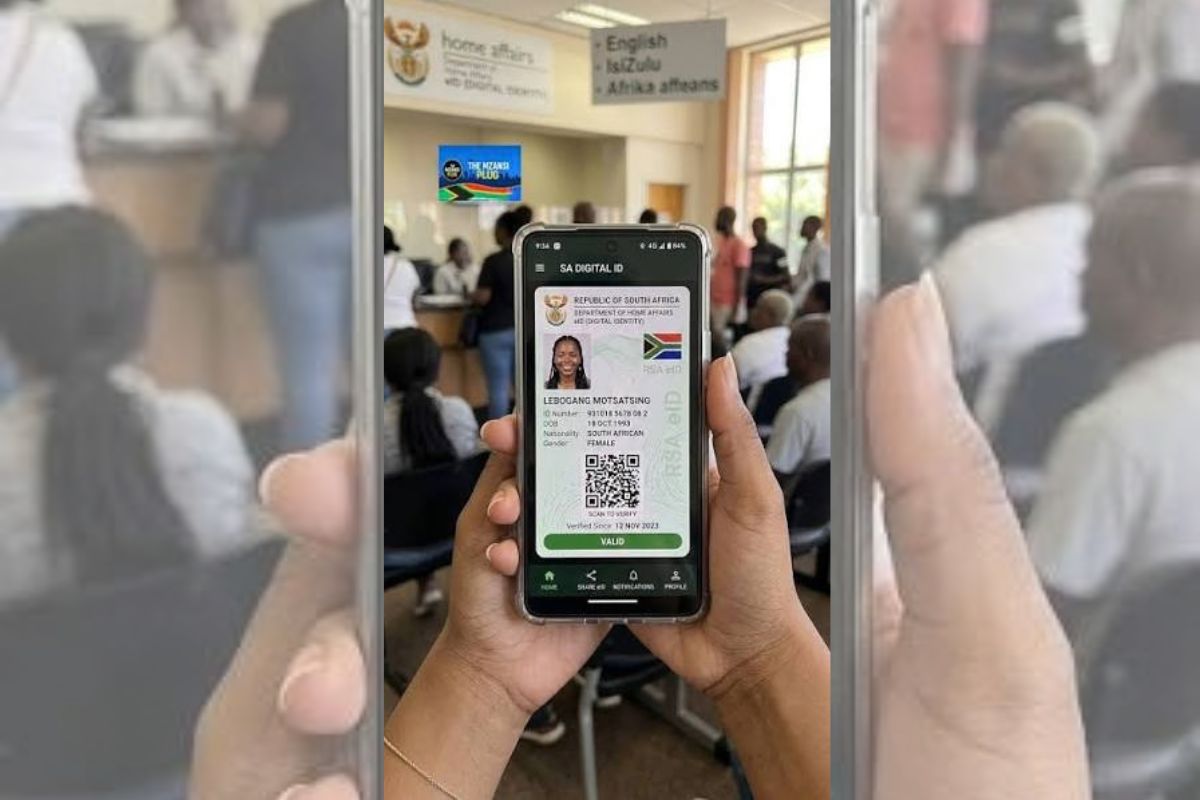
The digital ID will work on a smartphone through the MyMzansi Digital ID app.
The profile links the credential to the holder’s photograph and population register details. The proposed Wallet could hold an ID copy, birth certificate and marriage certificate.
The digital ID will not simply reproduce an ID card as a phone photograph. It will work as a remote verification tool linked to the holder’s biometrics. The system will also use device binding and cryptographic security.
Users will control information sharing through the Share function. An authorised official can scan a QR code generated by the user.
The phone then alerts the user about the verification request. The user can accept or reject the request. They can also select which details the official receives.
HOW DOES DIGITAL ID DIFFER FROM THE SMART ID?
The Smart ID remains a physical card that replaces the green barcoded ID book.
The digital ID adds a smartphone-based credential rather than replacing the Smart ID card. Schreiber said the physical Smart ID will remain available.
The Smart ID stores biometric and biographic information on an embedded chip. Its polycarbonate body also carries holograms and laser engraving. These features make physical tampering and forgery considerably harder.
The digital ID focuses on remote verification and controlled digital disclosure. It connects the credential to biometrics and a specific device.
That approach can reduce the need to hand over a physical card during transactions.
WHICH ID HAS THE STRONGEST SAFETY FEATURES?
The green ID book offers the weakest protection of the three formats. Its paper construction and manual photograph create greater opportunities for manipulation and fraud. Home Affairs has described it as far more vulnerable to fraud than the Smart ID.
The Smart ID introduced a major security improvement. Its physical features help officials inspect the card for tampering. Its chip also stores fingerprint biometrics and biographic information.
The digital ID takes security into the online environment. Biometrics help confirm the credential belongs to the holder. Device binding adds another layer by tying the credential to a specific device.
Cryptographic protection also supports the digital credential.
Privacy controls add another important difference. Users can see verification requests and decide whether to approve them.
They can also limit the information released. That gives the digital ID a stronger user-control element than either physical document.
The digital ID remains under development, so some features could change before rollout. For now, the Smart ID remains the practical replacement for the green book. The digital ID represents the next step towards mobile identity verification.