South Africa’s neighbour repatriates more United States deportees
Eswatini repatriates more United States deportees as Mauritanian and Congolese nationals return home.





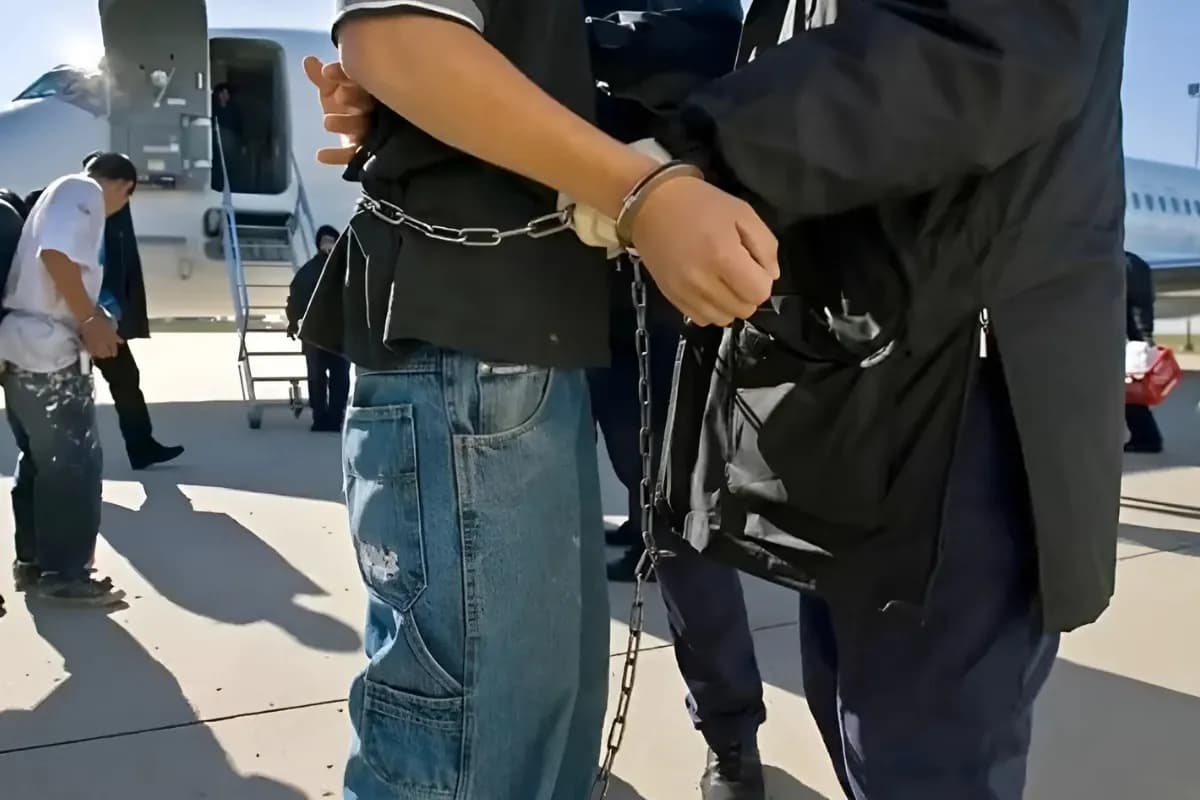
Eswatini has repatriated deportees from the United States, with the kingdom confirming on Tuesday that two foreign individuals had voluntarily returned to their home countries.
The men, from Mauritania and the Democratic Republic of Congo, were previously deported from the US under a controversial bilateral agreement.
Acting Eswatini government spokesperson Thabile Mdluli confirmed the Mauritanian departed on Saturday, 15 August 2026. The Congolese national left on Sunday, 16 August 2026, following requests to reunite with their families.
The repatriations form part of an ongoing arrangement concerning third-country nationals temporarily residing in Eswatini, with the kingdom agreeing to accept up to 160 deportees. This was part of a secretive $5.1 million (R86.2 million) agreement struck with the Donald Trump administration to receive migrants expelled under a third-country deportation programme.
These latest departures bring the number of repatriated individuals to four, following the previous returns of a Jamaican and a Cambodian national.
Why Eswatini repatriates deportees
The agreement has sparked intense security concerns in neighbouring South Africa, which almost entirely landlocks the kingdom.
The Department of International Relations and Cooperation has expressed deep anxiety regarding the profile of the deportees, after the the US Department of Homeland Security previously described some of these individuals as violent criminals with severe convictions.
The remaining deportees were held at the maximum-security Matsapha Correctional Centre outside Mbabane, where they are reportedly detained without charge.
Opposition party Pudemo has branded the cash-for-criminals programme as “human trafficking disguised as a deportation deal”. Local critics also fear new prison blocks with transparent walls, built using the US funds. In addition, these facilities may eventually house local political dissenters who oppose King Mswati III’s administration.