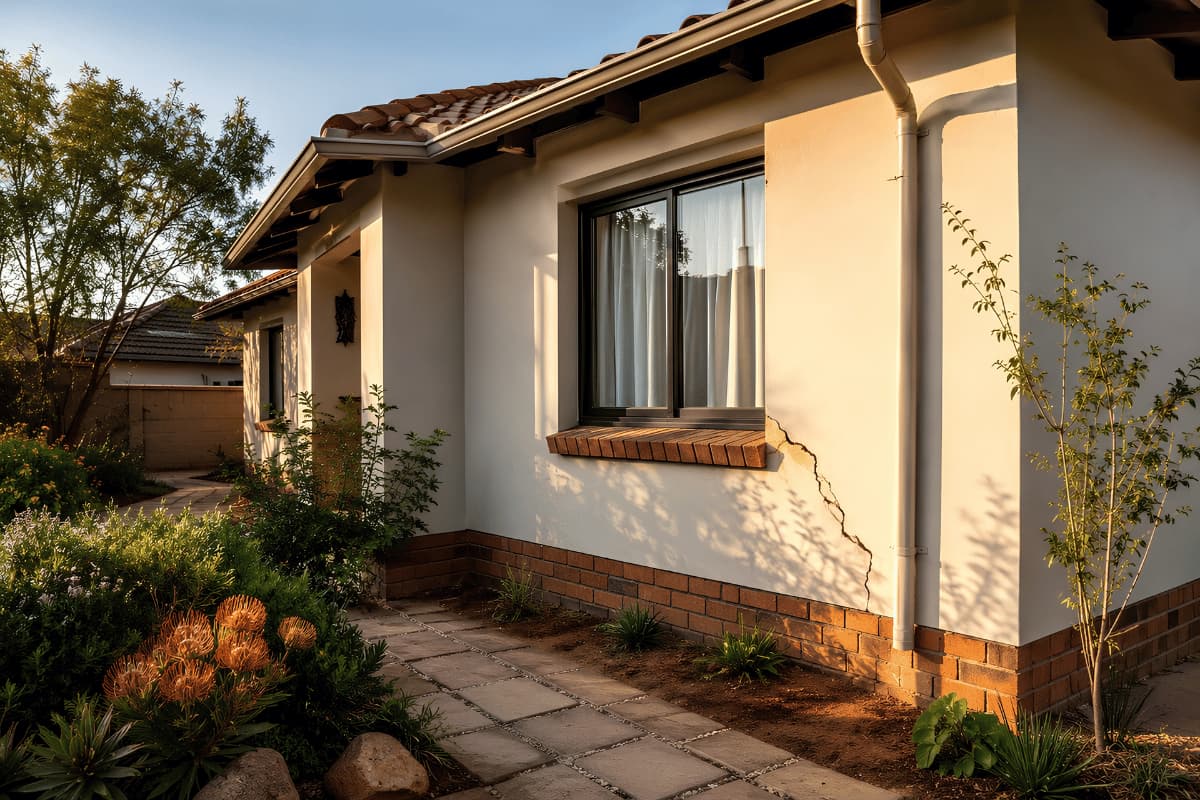
What causes foundation movement in South African Homes?
Foundation movement happens when the ground beneath a building shifts, expands, contracts or loses its ability to support the structure evenly.





A small crack in a wall doesn’t always mean your home has serious structural problems. Buildings naturally settle over time, and some minor cracking is common. Widening cracks or doors that suddenly stop closing properly may indicate foundation movement.
Foundation movement happens when the ground beneath a building shifts, expands, contracts or loses its ability to support the structure evenly. Several environmental and construction-related factors in South Africa can contribute to this problem.
Expansive clay soil
Certain parts of South Africa have clay-rich soil that expands when it absorbs water and shrinks as it dries. This repeated movement places pressure on foundations during cycles of heavy rain and drought.
If one section of soil has more moisture than another, the foundation may move unevenly. According to Pinnacle Structural Repair Specialists, this can lead to cracks over time and require building foundation repair.

Drought and changing rainfall patterns
Long periods of drought remove moisture from the soil, causing it to contract. When heavy rain eventually arrives, the ground can swell again or become unstable.
These changes can be especially noticeable around homes where trees and drainage systems create uneven moisture levels. South Africa’s variable climate means houses experience both very dry and unusually wet conditions within a relatively short period.
Poor drainage around the home
Rainwater should flow away from your foundations. During periods of heavy rainfall, blocked gutters and incorrectly sloped paving can allow water to collect beside the house.
This softens the supporting soil or washes some of it away. Plumbing leaks beneath the property can cause similar problems and go unnoticed for months. Persistent damp patches or unexplained soil erosion should therefore be investigated in case it may need building foundation repair.
Trees planted too close to the building
Large trees draw considerable amounts of water from the ground. In clay soil, this can cause the earth near the roots to shrink. Roots also spread beneath paving and walls
You don’t necessarily need to remove every tree near your home. However, its size, species, distance from the building and surrounding soil conditions should all be considered before action is taken.

Unstable ground conditions
Some South African properties are built on dolomitic land or areas affected by historic mining activity. Dolomite requires particular care because leaking water can contribute to underground erosion and the formation of cavities.
Filled ground can also settle if it was not properly compacted before construction. A site assessment is therefore an important part of building or extending a home.
Construction and foundation problems
Sometimes movement begins because foundations were poorly designed or built without accounting for the soil conditions. Inadequate compaction and unapproved alterations can also affect how weight is distributed through the building.
When should you call a professional?
Watch for diagonal cracks near doors and windows, cracks that continue widening, sloping floors or gaps between walls and ceilings. These signs don’t automatically mean the foundation is failing, but they deserve professional attention.
A structural engineer or qualified foundation specialist can determine whether the movement is ongoing and identify its cause. The earlier the underlying problem is found, the better your chances of preventing more extensive and expensive damage.