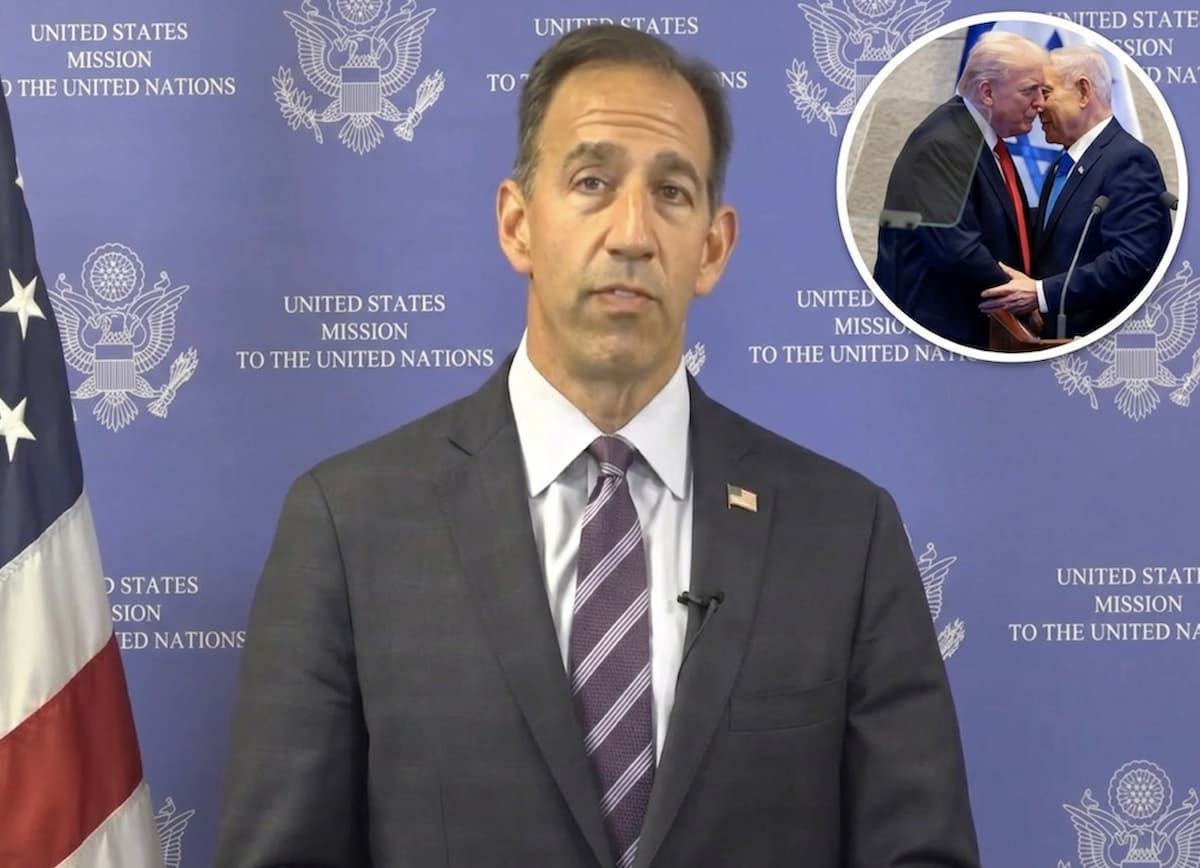
‘UN poisons its good name by associating with Durban,’ says United States diplomat
Washington is boycotting the UN’s Durban conference anniversary, warning its anti-racism legacy has fuelled antisemitism and hate against the West.





The Durban conference legacy has sparked a fierce international showdown as the United States distanced itself from the United Nations’ (UN) 25th anniversary commemorations of the Durban Declaration and Programme of Action (DDPA) in New York, branding the landmark 2001 anti-racism gathering a “platform for hate”.
On Thursday, United States diplomat Jeff Bartos, the American ambassador to the UN for Management and Reform, delivered a blistering critique of the World Conference Against Racism (WCAR).
In a speech posted online, Bartos declared the original gathering was an “utter failure” that platformed and promoted antisemitism, anti-capitalism, and anti-Westernism.
What is the Durban conference legacy?
The US delegation’s withdrawal from Durban in 2001 under former secretary of state Colin Powell set a historic precedent.
According to Bartos, parallel non-governmental organisation (NGO) gatherings wielded copies of the Protocols of the Elders of Zion, while street protesters carried signs saying “Hitler should have finished the job”. He added that Washington rejects this “poison of grievance politics”.
In a video panel published by UN Watch, former Canadian justice minister Prof. Irwin Cotler described the original conference as “a tipping point for the laundering of antisemitism” that “metastasised” under the UN. Bartos argued Durban conference’s ideology has since infected Western institutions, creating “an endless bureaucracy of blame” that teaches people to hate America.
However, South Africa’s ambassador to the United Nations, Mxolisi Nkosi, hit reportedly back.
According to SABC News, Nkosi defended the historic meeting, calling the WCAR “a tremendous success, adopting the global premier framework for combating systemic racism, xenophobia, and related intolerance” by consensus.
This clash comes as amid icy bilateral ties between Pretoria and Washington, and South Africa unrelenting in its international legal case against Israel – accusing Tel Aviv of committing genocide in Gaza.
Deepening geopolitical friction
In August 2025, South Africa submitted a substantial dossier of evidence to the International Court of Justice (ICJ), documenting Israel’s non-compliance with binding Provisional Measures Orders. This legal action has triggered severe diplomatic fallout, adding immense pressure to Pretoria’s already strained relationships with the US and other Western powers.
In January 2026, South Africa expelled Israel’s chargé d’affaires, Ariel Seidman, after accusing him of “unacceptable violations of diplomatic norms” and insulting social media attacks on President Cyril Ramaphosa. Tel Aviv retaliated instantly, expelling South African ambassador Shaun Byneveldt, who resided in the occupied West Bank.
And recently, the Donald Trump administration has exacerbated friction by reportedly doubling federal resettlement assistance for Afrikaner “refugees” to $4 500 (about R74 250), citing unsubstantiated claims of “white genocide”. This latest move coincides with South Africa’s ambassador to the United States, Roelf Meyer, lobbying to revoke the order.
For Pretoria, this standoff represents a high-stakes balancing act. Championing human rights has enhanced South Africa’s global prestige, but it risks deep economic fallout with the United States, its second-largest trading partner.
As the ANC-led Government of National Unity navigates these turbulent waters, South Africa’s ties with Israel remain a point of domestic division, keeping the country in a delicate geopolitical limbo.