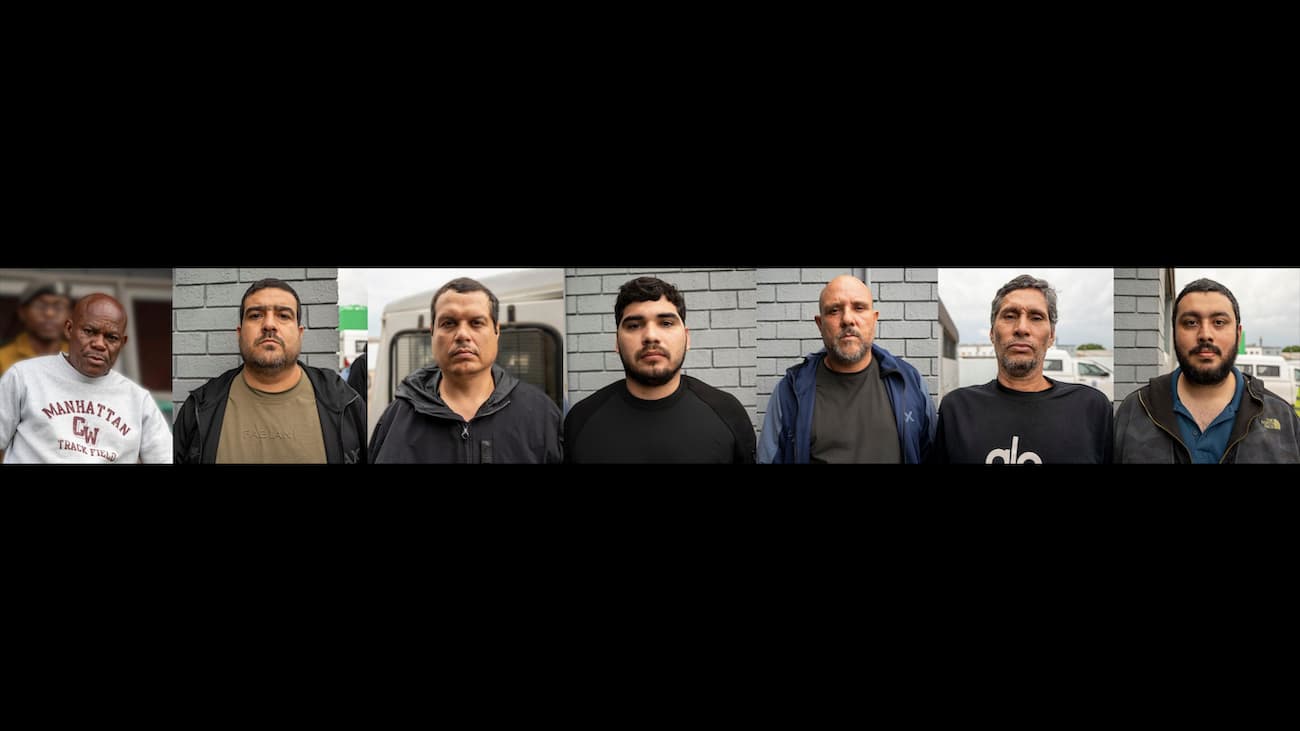
Six Mexicans arrested in Botswana as drug cartel fears engulf South Africa’s borders
The detention of six Mexicans in Botswana raises alarm that international drug cartels are encircling South Africa’s porous borders.

Six Mexican nationals have appeared before the Extension II Magistrate Court in Gaborone on 2 December 2025, charged with entering “Botswana through an Ungazetted Point of Entry”. The court appearance followed their arrest on 25 November 2025.
The Botswana Police Service, in a statement on Facebook, said preliminary investigations indicated that the men – Gumecindo Contreras Enriquez aged 61, Jose Alfredo Madera Pena, 48, Francisco Alejandro, 33, Jose Angel Corrales, 39, Carlos Alberto Torres Aquilar, 32, and David Hermandez Teran, 26 – had allegedly been illegally living in South Africa’s neighbouring country since 16 November 2025.
“A Nigerian male national, Uchema Charles Njoku, 53, was also arraigned before the same court on a single count of aiding and abetting, for allegedly assisting the suspects to illegally enter the country.
“Police investigations are ongoing to establish the purpose of their stay in Botswana. The six suspects have since been remanded in prison and are scheduled to return to court on 17/12/2025,” the Botswana Police Service said.
The police the added that Njoku – a Botswana resident and “married to Motswana” – was granted bail.
Mexicans arrested in South Africa
These arrests follow a deeply troubling two-year trend just across the border within South Africa, where Mexican nationals have been repeatedly arrested in major drug laboratory busts.
In September 2025, five Mexicans and one South African were apprehended following the discovery of an industrial-scale crystal meth (Tik) lab on a plot in Volksrust, Mpumalanga, estimated to be worth R350 million.
In November 2024, an undocumented 39-year-old Mexican national was arrested for allegedly operating a R100 million drug laboratory in Rietfontein, Pretoria, after extensive surveillance.
Just months earlier, in July 2024, the Hawks arrested three Mexicans after uncovering a colossal R2 billion crystal meth lab on a remote farm near Groblersdal in Limpopo.
The sheer scale of these operations, spanning Limpopo, Gauteng, and Mpumalanga, points to a strategic shift by transnational organised crime groups, a security expert told SABC News.
Retired Interpol Ambassador Andy Mashaile highlighted that international cartels had changed their modus operandi from dropping cocaine at the shoreline to establishing drug labs within South Africa.
Experts suggest that South Africa, which is one of the largest methamphetamine markets in the world, is being “franchised” by groups like the Sinaloa and Jalisco New Generation cartels, who are moving production closer to their users.
This wave of arrests in South Africa reveals that the Mexican nationals involved are not mere dealers but highly specialised “scientists” sent by the cartels.
Julian Rademeyer, of the Global Initiative Against Transnational Organised Crime, warned that this “franchising” involves cartels training up locals and collaborating with domestic syndicates and individuals who own remote plots for hidden laboratories.
The clear and alarming trend of expanding local production and collaboration signals higher quality meth entering the market, with the inevitable risk of escalating violence as gangs battle over drug turf in areas like the Western Cape, Eastern Cape, and parts of Gauteng.
The recent arrests in Botswana could underscore the geographic expansion of this cartel footprint, suggesting South Africa’s neighbours are now being exploited, increasing security risks across the region.