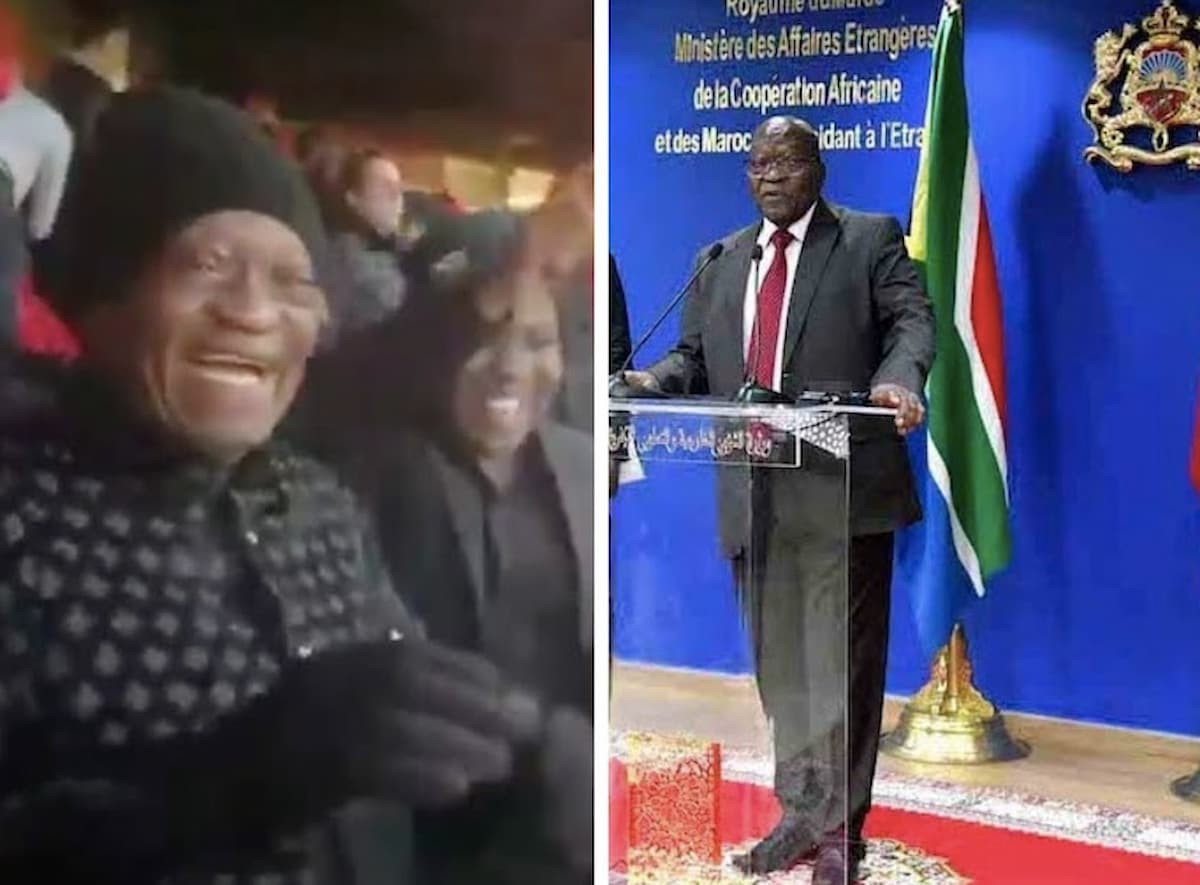
Zuma-Morocco tie-up deepens as ex-South Africa president dances at AFCON [video]
In July 2025, Jacob Zuma visited Rabat and met senior officials, where he was photographed with both South African and Moroccan flags.

Former South African president Jacob Zuma’s burgeoning engagement with Morocco has taken a highly visible turn, with video footage circulating of him attending the Africa Cup of Nations (AFCON) semi-final between Morocco and Nigeria on 14 January 2026 – a match the hosts won on penalties to reach the final.
The clip, posted on X (formerly Twitter), shows Zuma alongside the uMkhonto weSizwe (MK) Party’s head of presidency Magasela Mzobe and Thalente Myeni – son of late former South African Airways chairperson Dudu Myeni – in Rabat at the Prince Moulay Abdellah Stadium.
Morocco sealed a dramatic 4-3 shootout victory after a goalless draw in extra time, underlining the kingdom’s rising profile on the continental stage at a tournament it is hosting.
But Zuma’s presence in Morocco is more than just football fandom. It comes against a backdrop of deepening ties between the South African political figure and Rabat, with critics saying the optics underscore a broader and contentious diplomatic alignment – particularly over the long-running Western Sahara dispute.
Zuma-Morocco link: Departure from Pretoria’s Line
As leader of the MK Party, Zuma has openly supported Morocco’s Autonomy Plan for Western Sahara, a stance that breaks sharply with the African National Congress (ANC) and South Africa’s historic backing of the Sahrawi Arab Democratic Republic’s bid for self-determination.
In July 2025, Zuma visited Rabat and met senior officials, including Foreign Minister Nasser Bourita, where he was photographed with both South African and Moroccan flags – a gesture that drew formal objection from South Africa’s Department of International Relations and Cooperation (DIRCO). The ministry protested the use of the South African national flag at a non-state event, saying it inappropriately implied official endorsement of Zuma’s private engagement.
ANC secretary-general Fikile Mbalula and other party figures later labelled Zuma a “sellout” for siding with a policy they see as contrary to South Africa’s constitutional values and pan-African solidarity.
Strategic, Symbolic – or Opportunistic?
Observers point to Morocco’s vigorous diplomatic outreach, sometimes described as “dollar diplomacy“, which seeks to cultivate allies for its autonomy initiative – backed by major powers including the United States and parts of Europe.
The Western Sahara conflict, rooted in a decades-long struggle between Morocco and the Polisario Front backed by Algeria, remains one of Africa’s most intractable territorial disputes. Morocco’s autonomy proposal, first tabled in 2007, envisages a self-governing Sahara under Moroccan sovereignty – a compromise rejected by Polisario and its supporters.
To supporters of Zuma’s pivot, engaging with Morocco reflects realpolitik and a pragmatic approach to African issues; to detractors, it represents a political misadventure that jeopardises South Africa’s foreign policy consistency.
Whether Zuma’s high-profile Afcon outing will translate into deeper strategic ties remains uncertain – but for now his continued dalliance with Morocco ensures that one of the continent’s most polarising leaders remains firmly in the diplomatic spotlight.