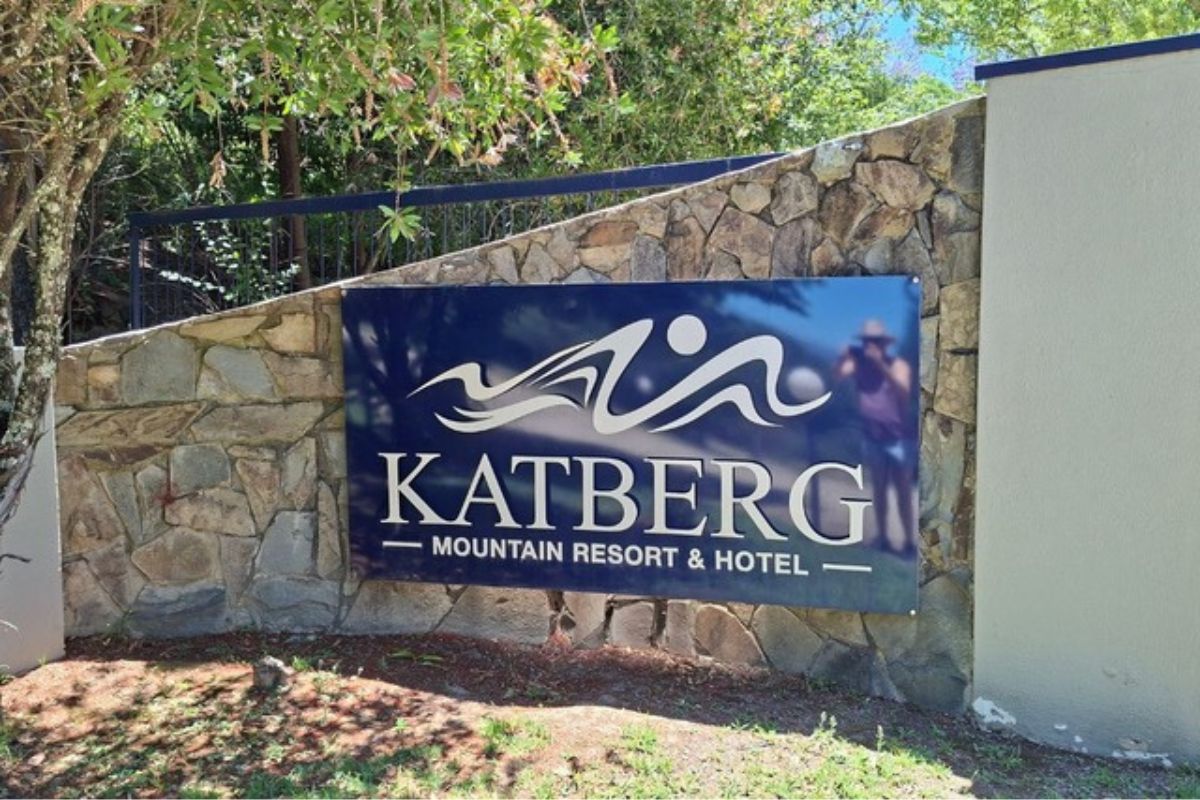
Katberg Hotel, between what it was and what it’s becoming
Katberg Hotel in the Amathole Mountains is quietly being restored, balancing history, affordability and renewed Eastern Cape tourism.

High in the Amathole Mountains, Katberg Hotel is quietly finding its feet again. With new investment, a renewed focus on families and events, and a sense of momentum returning, this Eastern Cape landmark is choosing progress over promises.
There is a point on the drive up into the Amathole Mountains where the pace of things changes, whether you want it to or not. The tar gives way to gravel. The corners tighten. You slow down, partly because the road demands it, partly because the landscape does.
By the time Katberg Hotel comes into view, it already feels slightly removed from ordinary time, and that’s very much the point.
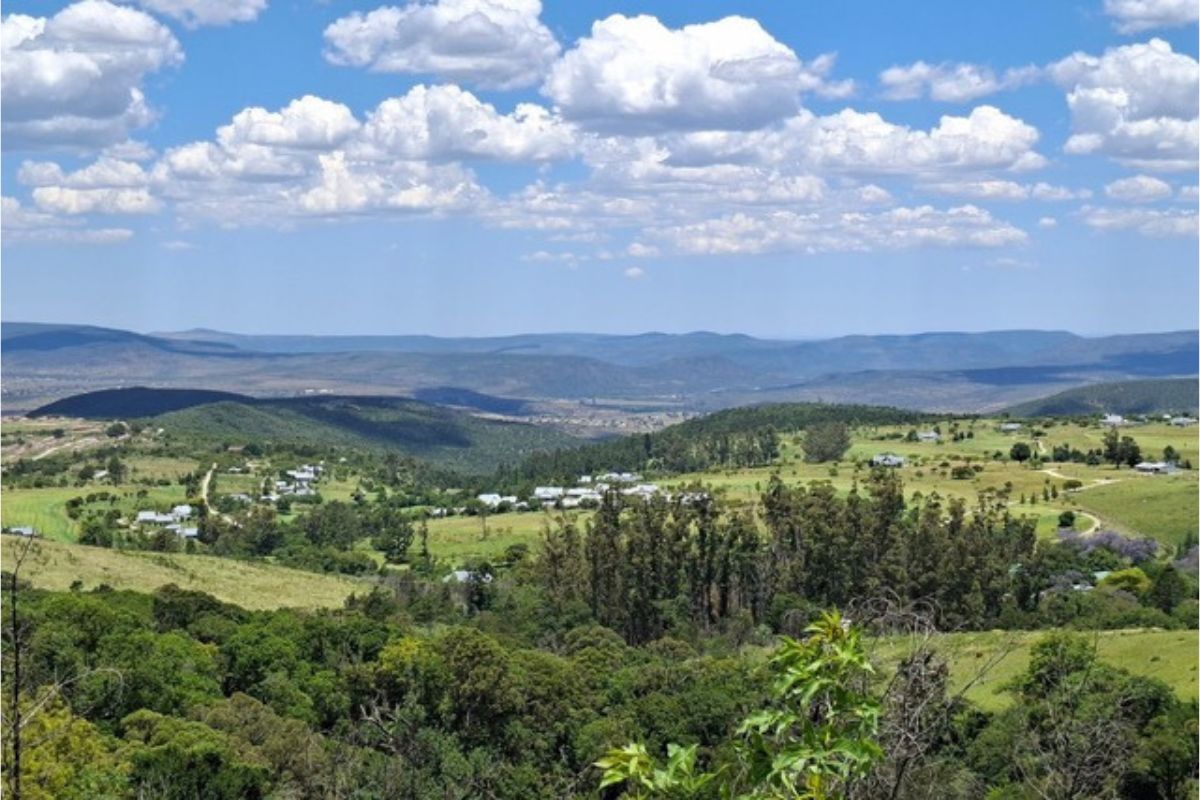
It’s also in the middle of a reset that involves stripping buildings back to their bones, rethinking how a place works, and deliberately deciding what not to change.
‘When I came through the gate, I saw this picture‘
Robert Gallo has been the general manager at Katberg for two years. He describes himself as someone who takes on struggling properties around the country, and he doesn’t romanticise what he inherited here.
“A challenge,” he says. “A big, big challenge.”
For much of that time, Katberg was kept alive through careful patchwork. As Gallo puts it, whenever something came in, something else got fixed. It wasn’t a transformation, not yet; it was survival.
That changed with a recent shift in ownership. According to Gallo, the new owner purchased the property roughly two and a half months before this interview and immediately began investing heavily in renovations.
“What he bought the place for, he’s already spent fixing it up,” Gallo says.
The difference now, he explains, is intent. This is no longer about holding things together. It’s about deciding what Katberg should be again.
Katberg Hotel: A building that has already lived several lives
Katberg’s history predates its role as a hotel. The main building is more than a century old and began life as a sanatorium, a TB hospital where patients were brought for the mountain air.
“The history here is unbelievable,” Gallo says.
Over time, the site evolved into a family mountain hotel, particularly popular in the mid-20th century, when there were fewer alternatives and places like this carried real weight as destinations.
That history still surfaces regularly. Gallo speaks of older guests arriving with black-and-white photographs, of couples returning decades later to see where their parents honeymooned in the 1940s. There are stories of British pilots training in the area during World War II, of crashes in the mountains, and memorial visits years later. Pictures are on display in the lobby and are worth a look.
Restoring Katberg Hotel rather than reinventing
According to Gallo, the stated vision is to return Katberg to its role as a family-focused mountain hotel by restoring what worked.
“Bring it back to its former glory,” he says. “Because it’s a family place. That’s what it’s been known as since the 1920s and 1930s.”
Family holidays, conferences, weddings and wellness retreats all have a place here. What matters more is balance.
Gallo says the hotel was graded as a three-star property for the first time in many years during the past year, with plans to move towards four-star grading once renovations are complete. At the same time, he is firm about affordability.
“It’s the Eastern Cape,” he says. “So we want to keep it affordable, even if we go up to four-star.”
According to Gallo, the completed hotel will offer 78 rooms, accommodating approximately 200 guests at capacity. Conference facilities can host up to 150 people, while weddings, often using private marquees, can comfortably exceed that.
What’s changing at Katberg Hotel
Much of the work currently underway is structural rather than cosmetic. Gallo explains that the buildings themselves are sound – a point he says is proven by the few leaks despite decades of heavy mountain rain. Our rooms, too, still had a few issues, but they were fixed immediately for our comfort.
Planned improvements, as outlined by Gallo, include a padel court, expanded children’s play areas, updated furnishings and linen, and the reinstatement of a proper spa and wellness offering. Some underused facilities, such as the squash court, may be repurposed into more flexible entertainment spaces. A fully functioning gym was already installed during my weekend there.
The aim, he also says, is to blend old and new.
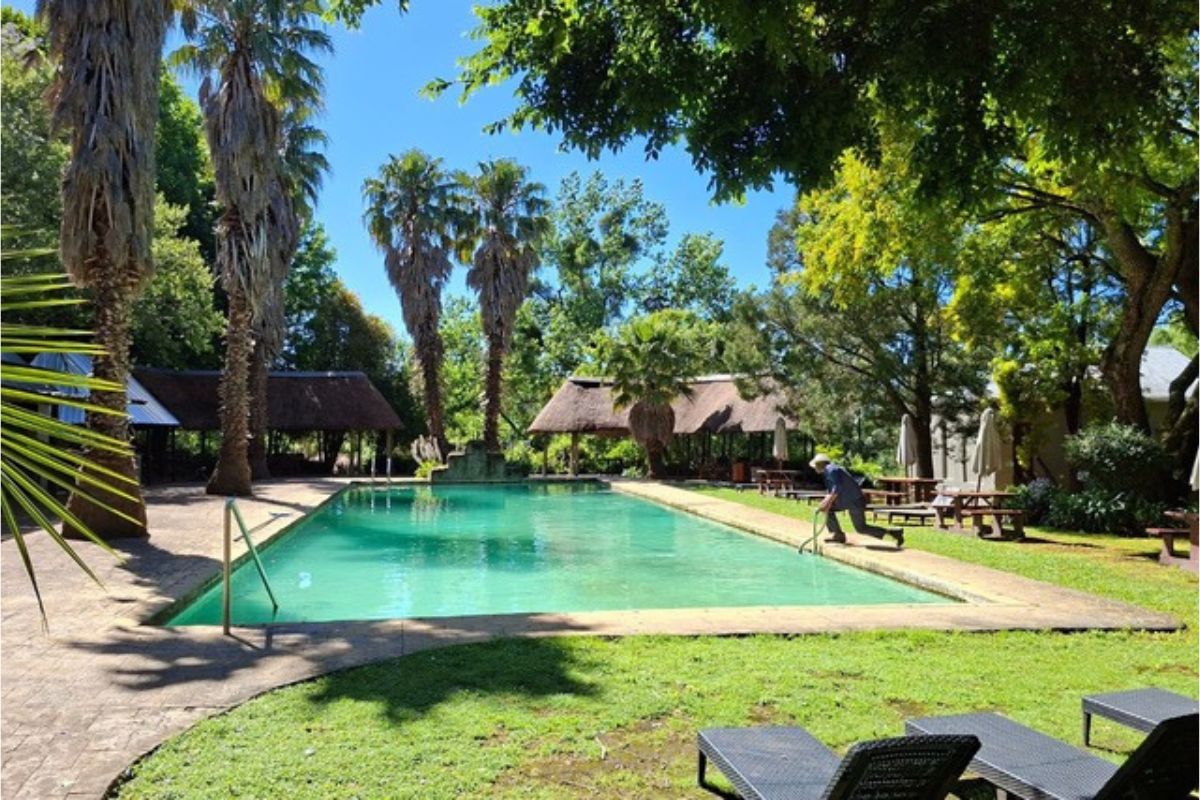
Because the spa facilities are still to come, we walked over to the adjacent golf estate for a massage during our stay, which took us under 10 minutes. Back at the hotel, relaxed afternoons were enjoyed around the swimming pool, while the landscaped gardens, huge trees, and mountain setting did much of the work.
Walking routes, wildlife and the wider setting
Beyond the buildings, Katberg’s natural setting remains one of its quiet strengths. There are established hiking routes leading into the surrounding forests and hills, and according to Gallo, more than 150 bird species have been recorded in the area.
During our hikes (one leading up to a waterfall, which we were unable to reach due to overgrowth at one point), we saw Samango monkeys moving through the forest, often heard before they were seen. They stayed close to the tree line.
Within the Amathole Mountains, the Samango is regarded as one of several species whose survival is closely tied to the remaining indigenous forest, a reminder that the landscape here is not only scenic but ecologically significant.
Katberg is also adjacent to the Katberg Eco Golf Estate, home to a top-100 South African golf course, adding another dimension for visitors looking to combine time outdoors with structured activity.
An unintended pause
There was one other consequence of Katberg being mid-transition that became quietly significant.
Because parts of the hotel are still under renovation, there was no internet access in the rooms during my stay. Wi-Fi is coming, Gallo says, it’s part of the broader upgrade, but for now, connectivity is inconsistent and limited to certain areas, specifically the main hotel area, restaurant and lobby.
It didn’t feel like an inconvenience. Reading returned to its original pace. Phones were briefly checked and then set aside.
There was also a simpler appeal to the stay that became increasingly noticeable over the weekend. Meals were prepared, spaces were maintained, and the usual rhythm of cooking, cleaning and organising simply fell away. It made Katberg an easy place to be, particularly for people who arrive already tired of domestic routines and want a few days where everything is taken care of.
It was, unexpectedly, a form of digital detox – the kind people usually pay extra for. And while the hotel will eventually be fully connected, part of me hopes Katberg always retains the ability to disconnect its guests, at least a little, from the noise they arrive with.
Hospitality, in practice at Katberg Hotel
When asked what he would point to if he had to explain what makes Katberg work, Gallo’s answer is simple.
“True South African hospitality,” he says.
It is difficult to argue with that. Throughout our stay, staff were consistently friendly, professional, available and attentive without being intrusive. On one afternoon, while we were at the swimming pool, a staff member came to check whether we would be joining lunch, and offered to bring it out rather than have us move back inside.
A wedding weekend at Katberg Hotel, and a sense of momentum
That sense of transition was already visible during my own visit. The weekend I was there, Katberg was hosting a wedding, and almost the entire hotel was booked out for the event.
According to Gallo, this is exactly the kind of use Katberg is being repositioned for, not just as a place to stay, but as a place where people gather for milestones.
Events of that kind, he says, are no longer occasional. Katberg now hosts a steady rotation of functions, from weddings and conferences to themed weekends, live music events, wine-and-jazz evenings and seasonal celebrations, with more planned as facilities come online.
Roads, regions and redirected travellers
The access road to Katberg is part of the experience, for better or worse. Sections are rough, and after heavy rain, the drive can become slow and slippery. While standard vehicles do make it up, patience is required; for the wedding, many “normal” sedans seemed to have made it up there easily and in one piece.
Gallo is candid about the issue. He says he has raised the condition of the road directly with provincial authorities, including officials in the Premier’s office.
“Fix this road,” he recalls telling them, “we employ half those people.”
Gallo also sees Katberg’s renewed activity as part of a broader shift in domestic travel. According to him, a significant portion of guests are now coming from the Free State, close enough for a long weekend, far enough to feel like a break.
“The Free State is becoming a very good market for the Eastern Cape,” he says.
At the same time, he notes that KwaZulu-Natal is also seeing a downturn in tourism.
Under-used, not underwhelming
For many South Africans, the Eastern Cape’s tourism story is also shaped by what used to be there as by ambitions that never quite materialised.
Family destinations like Fish River Sun, where generations once holidayed, including myself as a youngster, have fallen into long-term disrepair. Over the years, plans to revive or rebuild such places have surfaced repeatedly, usually with enthusiasm, but not much else.
Other ideas, including proposals to establish a film-industry hub in the province, echoing Cape Town’s success, have yet to gain traction.
Against that backdrop, what stands out at Katberg is not the scale of the vision, but the fact that something is actually happening.
Katberg is giving people a reason to come, stay, and experience the Eastern Cape rather than just passing through.
The Katberg Hotel takeaway
Katberg Hotel sits comfortably between what it was and what it’s becoming.
For those who value space, history and a sense of quiet progress, it already offers exactly what it promises, without pretending to be anything else.
I can already feel my next digital “detox” coming, and selfishly, I hope to visit again soon.