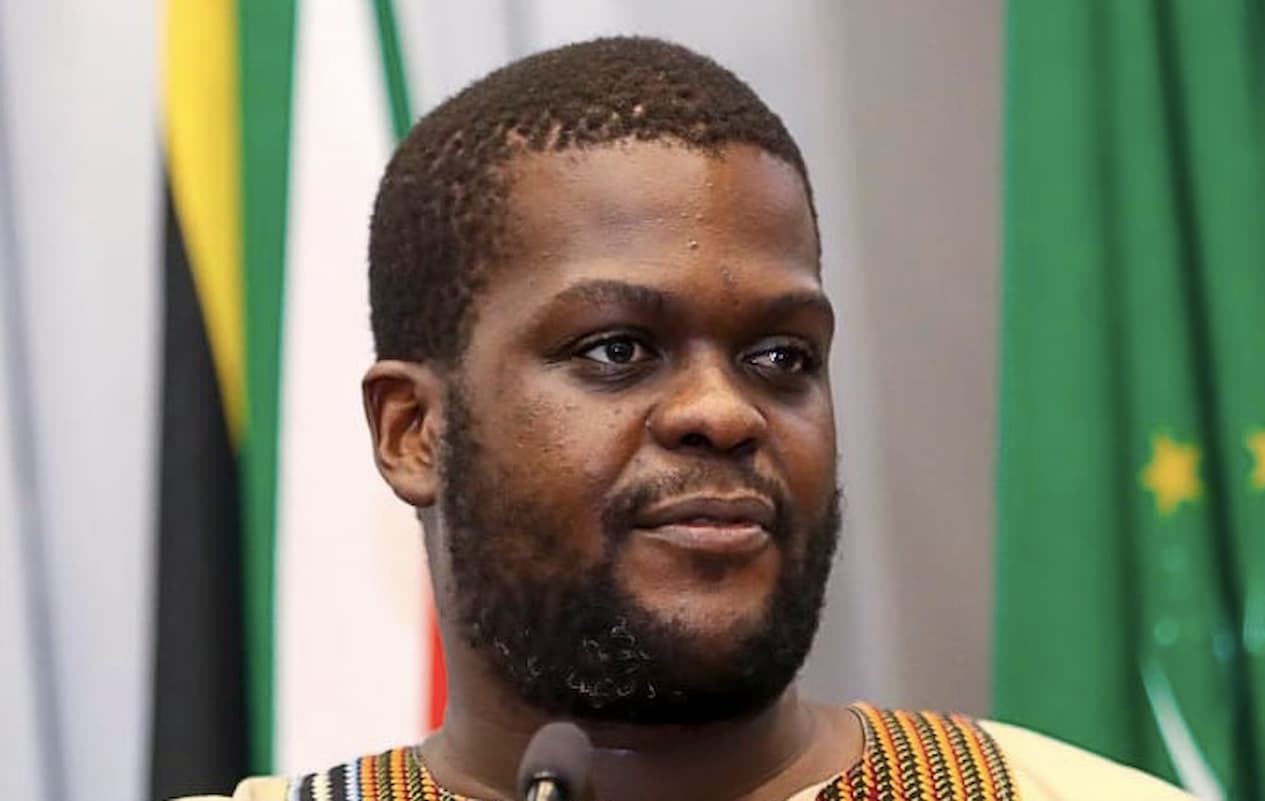
South Africa’s Vukosi Marivate joins global experts on UN artificial intelligence panel
Pretoria-born Marivate is among 40 world experts chosen to steer the UN’s first global independent scientific body on AI.

Professor Vukosi Marivate, a prominent computer scientist born in Ga-Rankuwa, Pretoria, has been recommended by the United Nations (UN) Secretary-General António Guterres to join the prestigious Independent International Scientific Panel on Artificial Intelligence (AI).
On 5 February 2026, South Africa’s government congratulated Professor Marivate, who was selected alongside 40 leading experts to assess the real-world impact of AI across global economies.
“The panel will be the first global, fully independent scientific body dedicated to closing the AI knowledge gap and assessing the real-world impacts of artificial intelligence across economies and societies.
“It will play a critical role in helping the global community distinguish fact from fiction, and science from misinformation, by providing an authoritative, unbiased reference point,” Government Communication and Information System said in a statement.
Marivate’s vision for AI in Africa
Marivate, 40, is currently the ABSA-UP chair of data science and a professor of Computer Science at the University of Pretoria.
His journey began in Ga-Rankuwa, north-west of Tshwane, where he first encountered a computer at an IBM reading centre in preschool. He later earned his PhD at Rutgers University in New Jersey as a Fulbright scholar after completing degrees at the University of the Witwatersrand.
Throughout his career, Marivate has championed the inclusion of African languages in technology. He is a co-founder of the Masakhane Research Foundation and Lelapa AI, an African startup focused on developing solutions tailored for the continent. His research specifically targets “low-resource” languages like isiZulu, Sepedi and Setswana, ensuring they are represented in the digital age.
Global expertise for the future
The UN General Assembly established the panel to provide authoritative, non-prescriptive assessments on AI’s opportunities and risks. The members, drawn from over 140 countries, include 19 women and 21 men from diverse disciplines, including academia and the private sector.
The recommended members of the panel:
- Girmaw Abebe Tadesse (Ethiopia)
- Tuka Alhanai (United Arab Emirates)
- Joëlle Barral (France)
- Yoshua Bengio (Canada)
- Tegawendé Bissyandé (Burkina Faso)
- Loreto Bravo (Chile)
- Mark Coeckelbergh (Belgium)
- Carlos Coello Coello (Mexico)
- Melahat Bilge Demirköz (Türkiye)
- Adji Bousso Dieng (Senegal)
- Awa Bousso Dramé (Cabo Verde)
- Mennatallah El-Assady (Egypt)
- Hoda Heidari (Islamic Republic of Iran)
- Juho Kim (Republic of Korea)
- Anna Korhonen (Finland)
- Aleksandra Korolova (Latvia)
- Vipin Kumar (United States of America)
- Sonia Livingstone (United Kingdom of Great Britain and Northern Ireland)
- Qinghua Lu (Australia)
- Teresa Ludermir (Brazil)
- Vukosi Marivate (South Africa)
- Bilal Mateen (Pakistan)
- Yutaka Matsuo (Japan)
- Joyce Nakatumba Nabende (Uganda)
- Andrei Neznamov (Russian Federation)
- Maximilian Nickel (Germany)
- Rita Orji (Nigeria)
- Román Orús (Spain)
- Alvitta Ottley (Saint Kitts and Nevis)
- Martha Palmer (United States of America)
- Johanna Pirker (Austria)
- Balaraman Ravindran (India)
- Maria Ressa (Philippines)
- Lior Rokach (Israel)
- Piotr Sankowski (Poland)
- Silvio Savarese (Italy)
- Bernhard Schölkopf (Germany)
- Haitao Song (China)
- Leslie Teo (Singapore)
- Jian Wang (China)
The panel is expected to present its inaugural annual report in July 2026 in Geneva. This appointment marks a significant milestone for South African representation in global technology governance, ensuring that African perspectives remain at the forefront of AI advancements.