Exploring the Tugela Falls hike in the Drakensberg
Tackle the Tugela Falls hike in the Drakensberg, a breathtaking route featuring iconic chain ladders and the world’s highest waterfall.

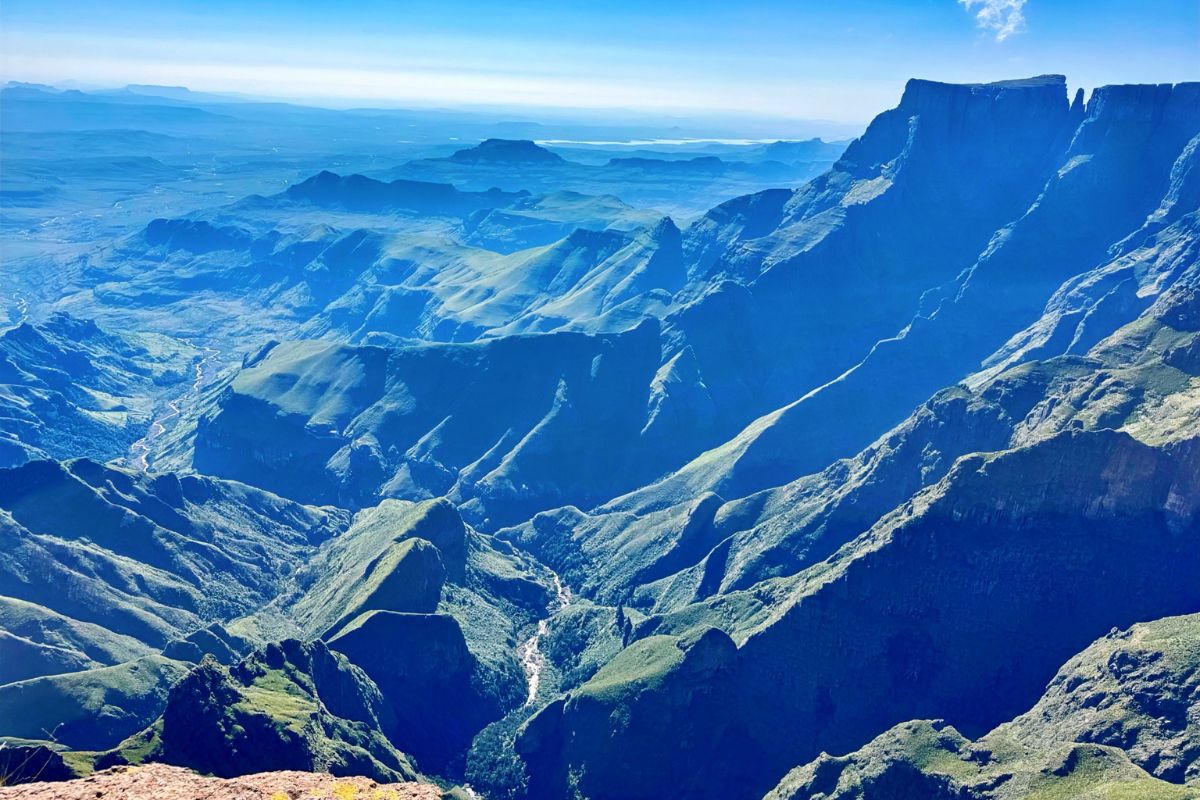
High above the northern reaches of the Drakensberg escarpment, Tugela Falls drops nearly a kilometre into space. Reaching it on foot is one of South Africa’s most iconic hikes: demanding, exposed in places, and unapologetically earned.
Altitude, weather and effort shape every step, nothing here is given freely.
The mountains start working on you long before the summit. Steep climbs, shifting conditions and vast silence sharpen your awareness as the Amphitheatre rises around you. This isn’t a casual scenic stroll; it’s a true mountain experience that commands respect and presence.
Often cited as the highest waterfall in the world, Tugela Falls plunges an estimated 948 metres in a series of dramatic cascades. The hike isn’t technical, but it is serious altitude, exposure and fast-changing weather demand preparation, steady pacing and humility in the face of the mountains.
Witsieshoek: Where the Journey Really Starts
Access to Witsieshoek Mountain Lodge is the starting point for the Tugela Falls hike, where hikers sign in and sort logistics before heading to the Sentinel. Hiking access is managed by Ezemvelo KZN Wildlife, and a valid permit is required.
One strong recommendation: book the 4×4 transfer to the Sentinel car park through the lodge. The access road is rough and punishing, unsuitable for low-clearance vehicles and hard even on capable 4x4s. The shuttle saves time, protects your vehicle, and leaves your energy where it belongs, on the hike.
The Route: Accessible, but Not to Be Underestimated
The Tugela Falls route is one of the most popular hikes in the Drakensberg, largely because the path is well-used and navigation is generally clear in good conditions. That popularity, however, shouldn’t be mistaken for ease.
The hike involves sustained uphill walking, exposure to wind and cold near the escarpment, and a long day on your feet. Weather can change quickly, visibility can drop without warning, and altitude is felt by even fit hikers. Proper gear, realistic pacing, and good judgment are essential.
Approached with respect and preparation, the route is straightforward to follow and immensely rewarding. Treated casually, it can become uncomfortable very quickly.
The Chain Ladders
No description of Tugela Falls is complete without mentioning the chain ladders.
They are vertical, exposed, and bolted directly into the cliff face of the Amphitheatre. For many hikers, they’re the most mentally demanding part of the route.
The reality is reassuring: thousands of hikers use the ladders every year. They are solid and regularly maintained. Move slowly, keep three points of contact, and focus on one rung at a time. Once past them, the escarpment opens up in dramatic contrast.
Hiking via the Gully Route
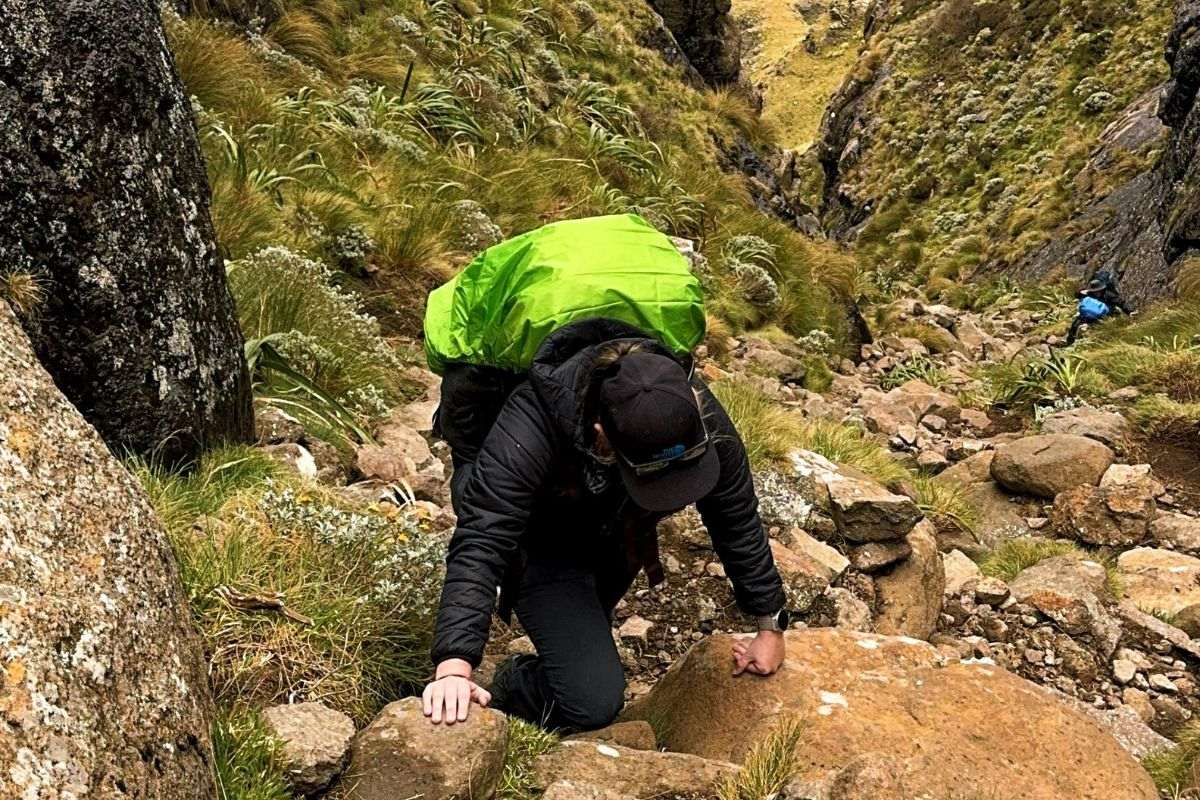
The gully is the only alternative route to reach the top of Tugela Falls without using the chain ladders, and it should not be underestimated. Whether taken on the ascent or descent, it is significantly more demanding than the standard route.
The gully involves slow, careful scrambling over large boulders and uneven terrain, requiring good balance, upper-body strength, and confidence on steep ground. Progress is methodical rather than continuous, and it can be physically taxing, particularly when carrying a full pack.
Conditions play a critical role. After rainfall, the gully often channels water down the slope, effectively turning it into a temporary waterfall. When this happens, the route becomes slippery, hazardous, and at times completely inaccessible. Attempting the gully in wet conditions is strongly discouraged.
For experienced hikers who are comfortable with scrambling and exposure, the gully can be a viable alternative to the chain ladders.
On the Escarpment
When Tugela Falls is flowing, the payoff is extraordinary. Water pours over the edge of the escarpment in multiple streams, vanishing into open air below. On clear days, views stretch deep into KwaZulu-Natal, and the scale of the Amphitheatre makes even experienced hikers feel small.
This is the reward for the climb.
An early start, a steady pace and everything you need on your back.
Trail Fuel That Pulls Its Weight
Long days in the Berg leave little room for unnecessary weight or empty calories. This is where reliable trail food matters. Hungry Hiker meals are lightweight, calorie-dense, and designed for endurance exactly what you want when fatigue sets in and conditions demand focus.
Essential Safety Tips for the Tugela Falls Hike
The Tugela Falls hike is achievable for prepared hikers, but conditions in the Drakensberg can change rapidly. Taking basic precautions makes a significant difference to safety and enjoyment.
Weather precautions
Drakensberg weather is unpredictable. Even in summer, pack a waterproof and windproof jacket, along with a beanie and gloves. Temperatures can drop suddenly on the escarpment.
Water and hydration
Do not rely on finding clean water on top of the escarpment, particularly in winter or dry periods. Carry sufficient water from the start.
Group safety
Do not hike alone. The route is remote, and group travel provides essential support in case of emergency.
Emergency contact
Save the Mountain Search and Rescue number before setting out:
Search and Rescue: 0800 005 133
Camping considerations
If camping overnight, ensure your tent is rated for strong winds and be prepared for freezing temperatures.
Best time to go
For the best experience, plan your hike between September and April, when Tugela Falls is most likely to be flowing. In winter, the falls can dry up and cold conditions intensify.
Hiking to Tugela Falls stays with you long after the descent. The effort, the exposure, and the sheer scale of the escarpment have a way of rewiring your perspective. You leave tired, yes but clearer, steadier, and carrying a quiet confidence that follows you well beyond the trail and into everyday life.