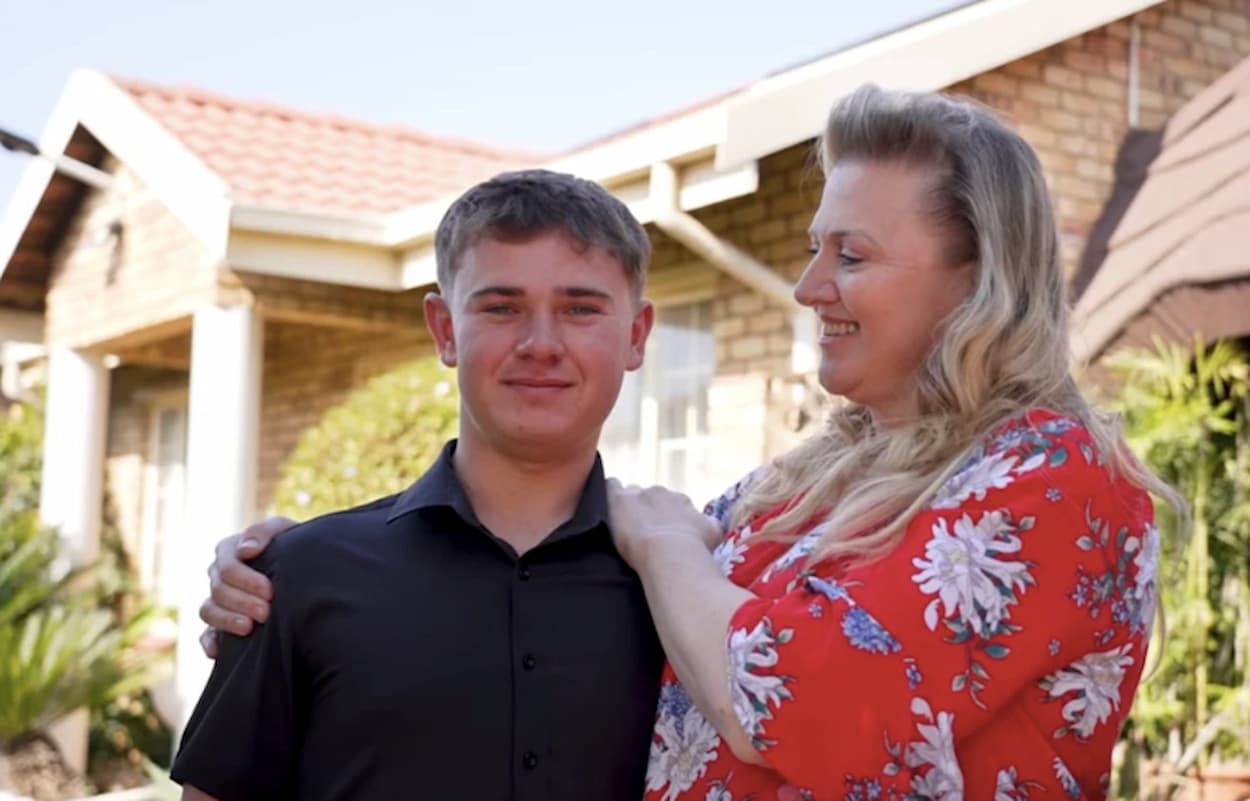
The angels among us: Tristan Smit’s story of hope and survival
Fifteen years ago, a little boy was given six weeks. Today, Tristan Smit has a story, a future, and a 17th birthday behind him.

This morning I opened an email about a young man called Tristan Smit.
At the age of two, some 15 years ago, Tristan was diagnosed with terminal brain cancer. His parents, Helen and Pierre, received the most unimaginable news. Their son had six weeks to live.
They were advised to keep him comfortable. To manage the pain. To prepare to say goodbye.
But sometimes, just when the horizon narrows to a pinprick, something unexpected pushes it wide open again.
Tristan Smit’s journey
In March 2010, Tristan’s crèche teachers decided that “nothing more can be done” was not a phrase they were willing to accept. They reached out to Jacaranda FM and its philanthropic initiative, Good Morning Angels.
Around the same time, Helen’s sister-in-law, a specialist physician, began researching treatment options for ependymoma cancer, the type Tristan had. She found a specialised proton therapy treatment in Texas which offered a sliver of hope. Of course, the treatment also came at an enormous cost.
The Good Morning Angels team helped raise awareness around Tristan and the battle he faced amongst its loyal listeners. With the generosity and support of those listeners and countless do-gooders, a significant amount of money was raised. Those acts of kindness helped get Tristan to Texas, where he received the treatment he needed.
It worked. He survived.
Fifteen years later, he gets to tell this story. A story not only of survival, but of the people who stood in the gap. His parents. His family. His crèche teachers. The doctors. The strangers who may never have met him, but chose to care anyway.
He turned 17 last April. A birthday once considered impossible. A milestone stitched together by courage, medicine, and the generosity of people who may never meet him.
It is tempting to call this a miracle. Perhaps it is. But maybe miracles are not lightning bolts from the heavens. Maybe they are built quietly, human by human, choice by choice.
When we hear the word “angel”, we often picture wings and halos. Yet the angels in Tristan’s story wore headsets in a radio studio. They sat in classrooms. They were family members, doctors and everyday people. They believed that hope deserved a fighting chance.
Believing in angels does not require blind faith. Sometimes it simply requires looking around and recognising them.
Fifteen years ago, a little boy was given six weeks. Today, he has a story, a future, and a 17th birthday behind him.
Some might call that a miracle. Others might call it kindness, multiplied. Either way, it is proof that even in the darkest rooms, light still finds a way in.