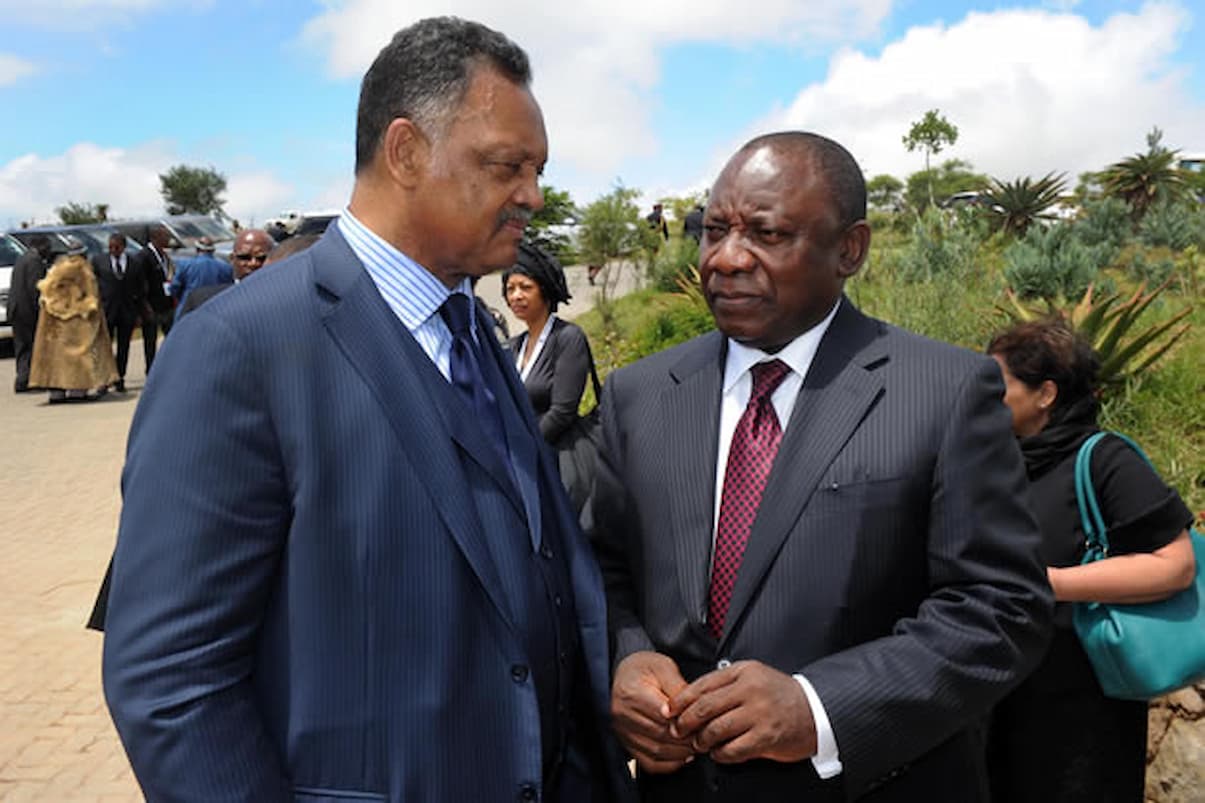
Jesse Jackson: US activist, who marched against apartheid South Africa, dies at 84
Jesse Jackson will be remembered for, among other things, his bonds with South Africa, Winnie Madikizela-Mandela and Madiba.

Reverend Jesse Jackson, the legendary US civil rights campaigner who forged an everlasting bond with South Africa during the darkest days of apartheid, has died at the age of 84.
Jackson, a two-time Democratic presidential candidate and protege of Dr Martin Luther King Jr, passed away on Tuesday, 17 February 2026.
The Jackson family described him as a “servant leader” to the overlooked around the world. While no specific cause of death was given, he had lived with progressive supranuclear palsy for over a decade and survived two hospitalisations for Covid in recent years.
For South Africans, Jackson was more than an American politician; he was a fearless ally who used his global platform to demand the end of a “terrorist state”.
Jesse Jackson: Death of a ‘trailblazer’ for global justice
Born in South Carolina in 1941, Jackson’s activism began in the segregated South before he joined King’s inner circle, famously witnessing the 1968 assassination of his mentor in Memphis. He later founded the Rainbow PUSH Coalition, using economic boycotts to force corporate inclusion for black workers – a strategy he would later apply to the fight against the Pretoria regime.
Jackson first arrived in South Africa in 1979, invited by local church groups after the death of Steve Biko. At a time when many US leaders remained silent, Jackson brought “consciousness-raising” techniques to the Crossroads squatter camp and Soweto. Clad in a multi-coloured blanket gifted by residents, he famously declared to thousands: “This land is changing hands.”
Bonds with Winnie and Nelson Mandela
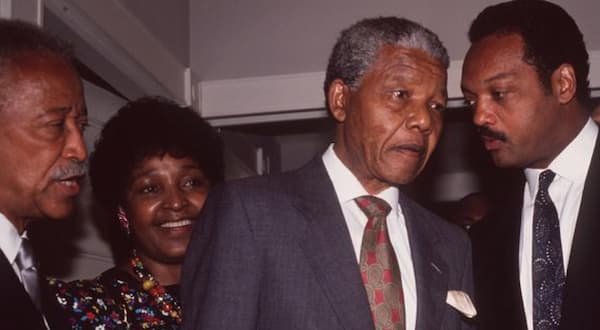
Jackson shared a profound relationship with the late Winnie Madikizela-Mandela, whom he met during that 1979 visit while she was under a banning order. He later described her as the “Mandela heart” and a “shining light” that challenged the darkness of the regime.
Jackson often noted that while Nelson Mandela was silenced on Robben Island, it was Winnie who kept the flame alive in the “belly of the beast”.
When Nelson Mandela was finally released in 1990, Jackson was waiting in Cape Town, describing the scene as a “release of glee and joy”. Mandela later thanked Jackson for his 1984 US presidential campaign, where he had made sanctions against apartheid a central platform.
Jackson later served as part of the official US delegation for Mandela’s 1994 inauguration, cementing a relationship he called “everlasting”.
The unfinished struggle: ‘Free but not equal’
In his later years, Jackson remained a vocal critic of the economic disparities haunting post-1994 South Africa. During his 2013 visit to receive the Order of the Companions of OR Tambo in Silver, he warned that while black South Africans were “freer”, white South Africans remained “richer”.
He frequently preached that “freedom is not equality”, urging a new generation to fight for economic justice and land ownership. Jackson viewed the struggles of the American South and South Africa as interrelated, noting that the same corporate interests often propped up both systems of oppression.
Jackson is survived by his wife, Jacqueline, and six children. His legacy as a “transformer” who risked his life to chart a new course for two continents remains a cornerstone of the global civil rights movement.