The alien plant that South Africans secretly love
Discover why a striking alien plant often found next to roadsides and misty forest edges in Mpumalanga, wins hearts across South Africa.

There is something magical about spotting beautiful lilies glowing white beside a dusty rural road. In the Lowveld region, especially around the little town of Sabie, the Formosa lily rises like a wild lantern just before autumn strikes.
Travellers, tourists and hikers often pause to admire its graceful form. Though not indigenous, this elegant flower has woven itself into local landscapes and memories.
Originally from Taiwan, the Formosa lily, Lilium formosanum, found ideal conditions far from home. It now grows freely in plantation belts and warm bushveld margins in parts of the Lowveld.
Over time, this alien plant became a familiar sight that many people welcome rather than question.
WHEN ARE THE ALIENS IN BLOOM
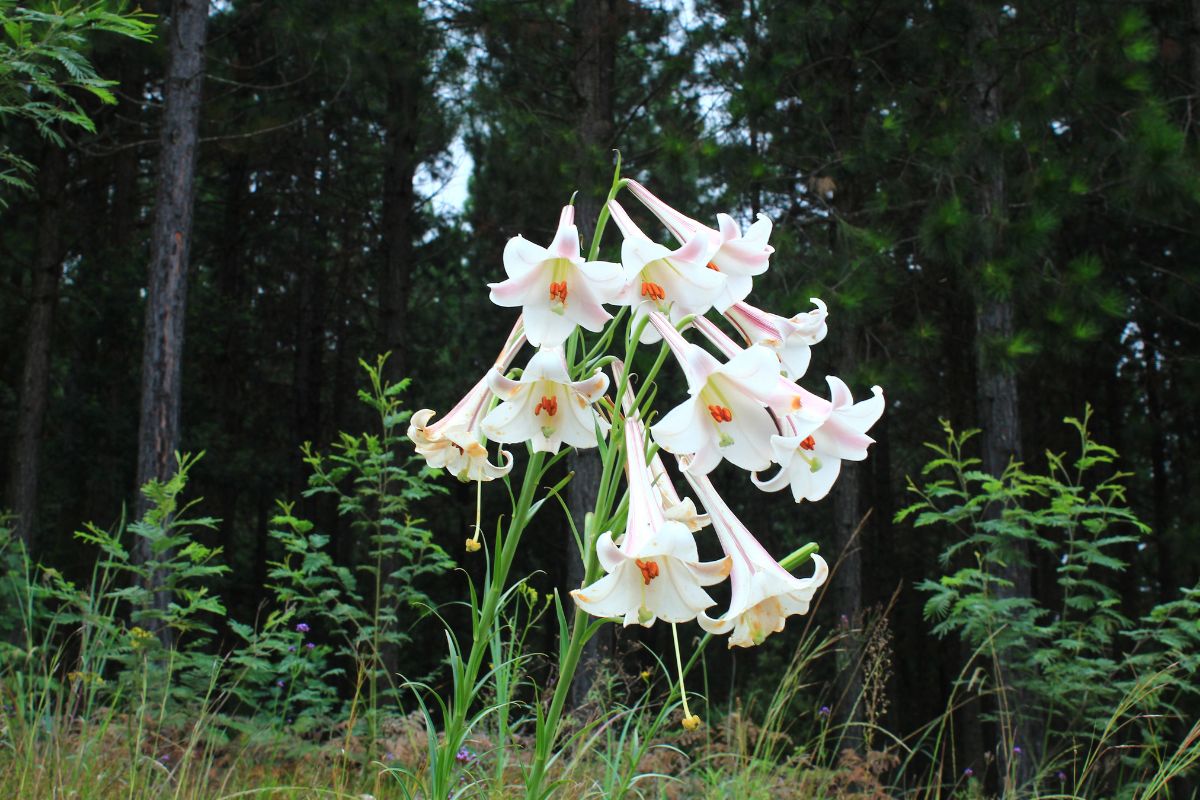
Recognising this striking alien plant is simple once you know its features. Tall, slender stems can rise well above one metre. At their tips hang long, white, trumpet-shaped flowers. A soft pink or purplish flush often colours the outer petals. Inside, bold orange pollen dusts long stamens.
The flowers open wide during late February or March afternoons and release a gentle fragrance. This scent drifts across roadside verges and forest clearings as the light fades.
Photographers and nature lovers often seek these blooms for their dramatic silhouette against golden Lowveld sunsets.
Formosa lily thrives in disturbed ground. It appears along gravel roads, plantation tracks, and forest margins. It also colonises open patches after fires or heavy rains. This ability gives it a pioneer quality, almost like a floral explorer staking new territory.
WHY THIS ALIEN PLANT SPREADS SO EASILY
South Africa’s summer rainfall climate mirrors conditions in its native range. Warm days, seasonal storms, and fertile soils encourage rapid growth, explaining why the lily became naturalised in several provinces.
The success of this alien plant lies in its remarkable reproductive strategy. After flowering, long upright seed pods develop along the stem. When dry, they split open to release clouds of papery seeds.
The wind carries these seeds across fields and valleys. New plants soon take root where moisture and warmth allow.
Despite its popularity, conservationists watch it closely. In sensitive habitats, it can compete with indigenous flora. Removal programmes sometimes take place to protect biodiversity, yet local communities still admire them and often use them in displays.
For many South Africans, the Formosa lily symbolises resilience, as it remains tall through storms and dust alike.
In doing so, this wandering (but alien) bloom found a fond place in the nation’s heart.