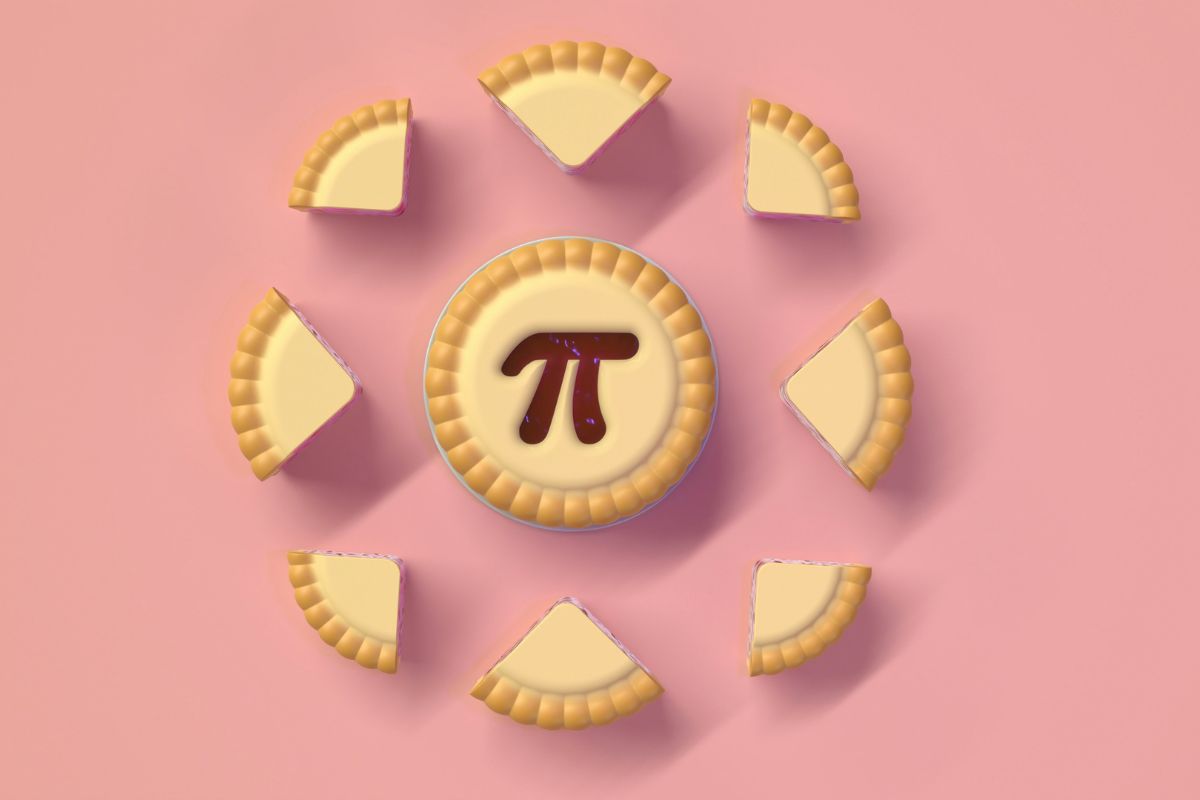
Why understanding maths and Pi still shapes modern life
Missed Pi Day? Discover why understanding maths and Pi still shapes modern life, from Einstein’s legacy to everyday technology.

Conversations about understanding maths in modern life continue long after Pi Day – whether you celebrated it or not.
Each year on 14 March, classrooms, cafés, and science centres buzz with number games and pie jokes, yet behind the fun lies a deeper story. Pi (the Greek letter π) connects curiosity, innovation, and the intricate rhythms of modern daily living.
Pi is that special number used in maths that tells us how many times the distance around a circle (the circumference) is bigger than the distance across it (the diameter). The number associated with Pi is generally seen as 3.14. Do you recognise the date for its celebrations?
The more accurate numerical value is 3.14159265359, but it actually goes on forever without repeating. That is why it is called an infinite number. No matter how big or small a circle is, this relationship is always the same.
WHY UNDERSTANDING MATHS STILL MATTERS IN MODERN LIFE
Pi Day was first celebrated in 1988 in San Francisco, but today, it is observed globally. And from Cape Town to London, students explore circles, coding, and cosmic ideas – with the help of Pi.
Still no end in sight, the wonder of Pi in mathematics continues to inspire. People use Pi in modern life for designing, creating computer graphics, and even planning space travel. Engineers rely on it when designing bridges, turbines, and mobile networks. Gamers use it in graphics algorithms. Pilots’ navigation systems depend on it.
INFINITE MINDS THINK ALIKE
14 March also honours two giants of science. Albert Einstein was born on this day in 1879, and Stephen Hawking in 1942. He died on the same date in 2018. Both lived 76 years. As the saying goes: great minds think alike, and their theories reshaped ideas about gravity, time, and black holes.
Einstein’s work on relativity guides GPS satellites and space research. Hawking explained cosmic mysteries in clear, human language. Their legacies prove that bold thinking fuels discovery.
NO END IN SIGHT FOR UNDERSTANDING MATHS
So, can you do the maths? Understanding what Pi is comes down to confidence. Maths builds problem-solving skills. It sharpens judgment and creativity.
It supports careers in finance, design, medicine, and environmental science. In a world investing in technology and innovation, these skills carry real power.
And as the Pi Day buzz settles, the circle of curiosity keeps turning. Whether you bake a pie or solve an equation, the message stays simple: Numbers shape stories, futures, and the way we see our universe.