‘Jesse could not stand Obama’: Ramaphosa hails Jackson’s ‘moral authority’, Trump touts personal ties
Presidents Cyril Ramaphosa and Donald Trump expressed sadness at Jesse Jackson’s death, but their tributes offered vastly different perspectives on the activist’s impact.

World leaders, including President Cyril Ramaphosa and US President Donald Trump, have paid tribute to the legendary civil rights activist Jesse Louis Jackson Sr, who died aged 84 on Tuesday, 17 February 2026.
The Jackson family described the former Democratic presidential candidate as a “servant leader” to the overlooked, following his decade-long battle with progressive supranuclear palsy.
As reported by SA People and official statements from South Africa’s Presidency, the passing of the Martin Luther King Jr protege has sparked deep reflection on his “everlasting bond” with South Africa. While both Ramaphosa and Trump expressed sadness, their tributes offered vastly different perspectives on the activist’s global impact.
Cyril Ramaphosa’s tribute to Jesse Jackson
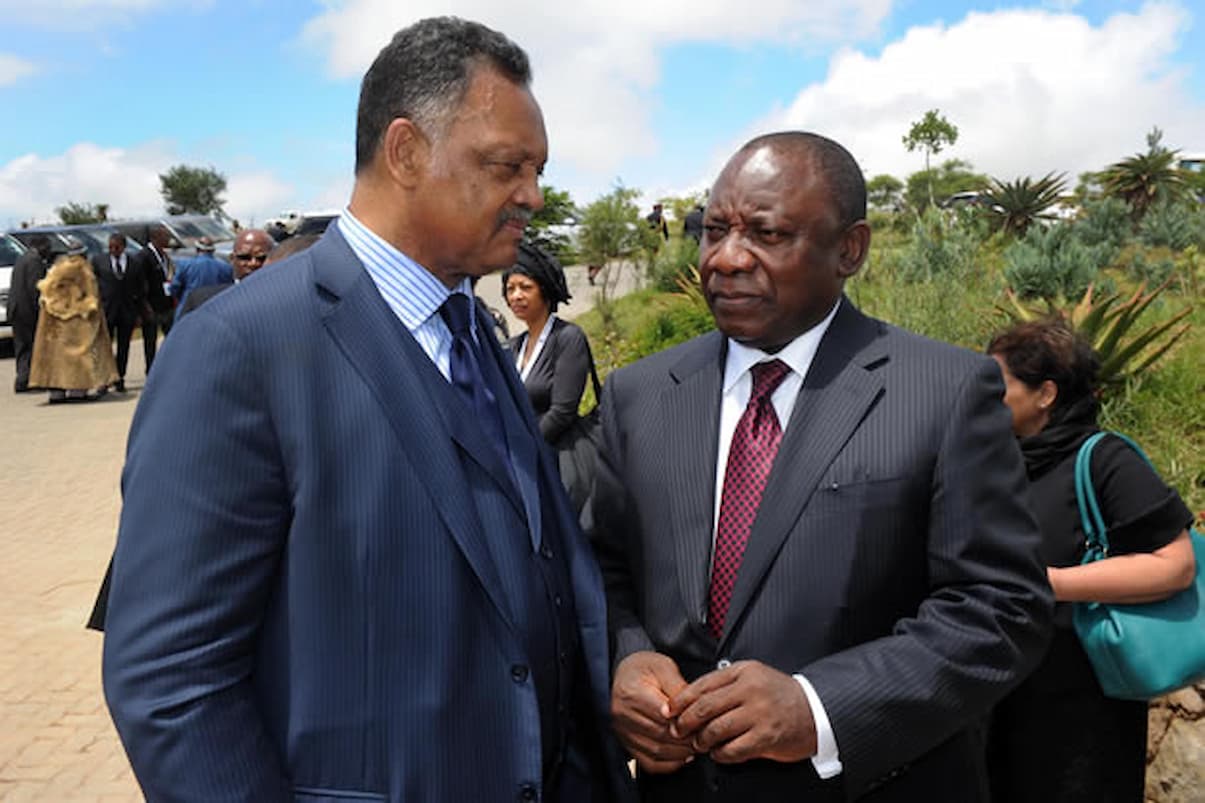
Ramaphosa’s tribute was sombre and focused on Jackson’s “towering contribution to the global anti-apartheid cause”. The president referred to Jackson as a “global moral authority” who devoted his life to a cause of justice that knew no borders.
Ramaphosa fondly recalled the 33rd Gandhi Walk he shared with the activist in 2018, noting he would “treasure the opportunity” to have discussed Jackson’s vision for a better world. He praised Jackson for having “fought a good fight” through his Baptist ministry and activism.
Donald Trump’s tribute to Jesse Jackson
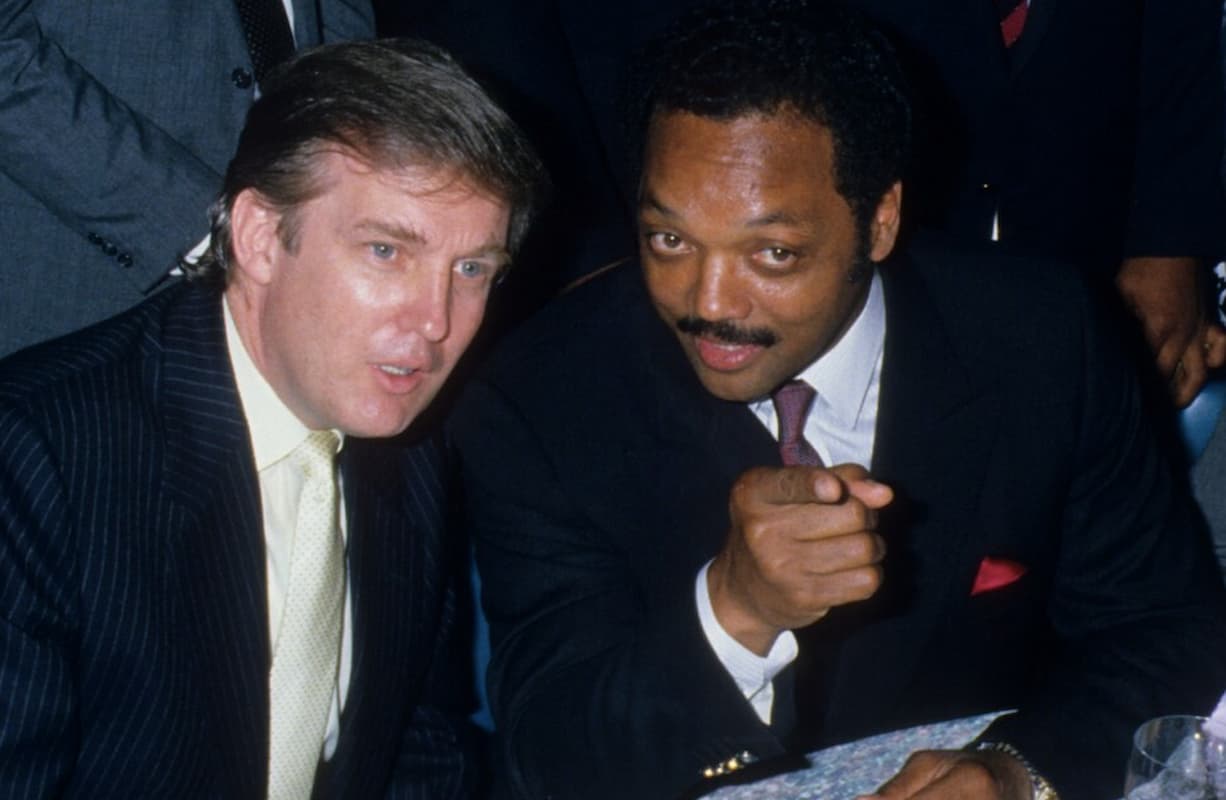
In a starkly different tone, posted on his Truth Social social media platform, Trump’s tribute was deeply personal and transactional, frequently highlighting his own history of supporting the activist.
Trump described Jackson as a “good man” with “grit” and “street smarts”, but used the statement to defend himself against claims of racism from the “Radical Left”. He reminded his followers that he had provided Jackson’s Rainbow Coalition with office space at 40 Wall Street for years.
Trump further claimed credit for passing criminal justice reform and funding for Historically Black Colleges & Universities (HBCUs) at Jackson’s request. In a characteristically blunt move, Trump also remarked that Jackson “could not stand” former US president Barack Obama.
Ties with South Africa
Jackson first arrived in South Africa in 1979, following the death of Steve Biko, where he declared to thousands in Soweto that “this land is changing hands”.
He shared a profound relationship with Winnie Madikizela-Mandela, whom he described as the “Mandela heart” that kept the flame of liberation alive while Nelson Mandela was imprisoned.
Jackson’s tireless campaigning for disinvestment from the apartheid economy eventually led to him being honoured with the Order of the Companions of OR Tambo in Silver in 2013.
Despite his “trailblazer” status, Jackson remained a vocal critic of the economic disparities in post-1994 South Africa, famously warning that while black citizens were “freer”, white citizens remained “richer”.
Jackson is survived by his wife, Jacqueline, and six children. Jackson’s legacy as a “transformer” who risked his personal safety to challenge systems of oppression remains a cornerstone of the global civil rights movement.