The Log-Drum in the South Loop
Chicago, South Africa, and the ethics of the global ‘vibe’

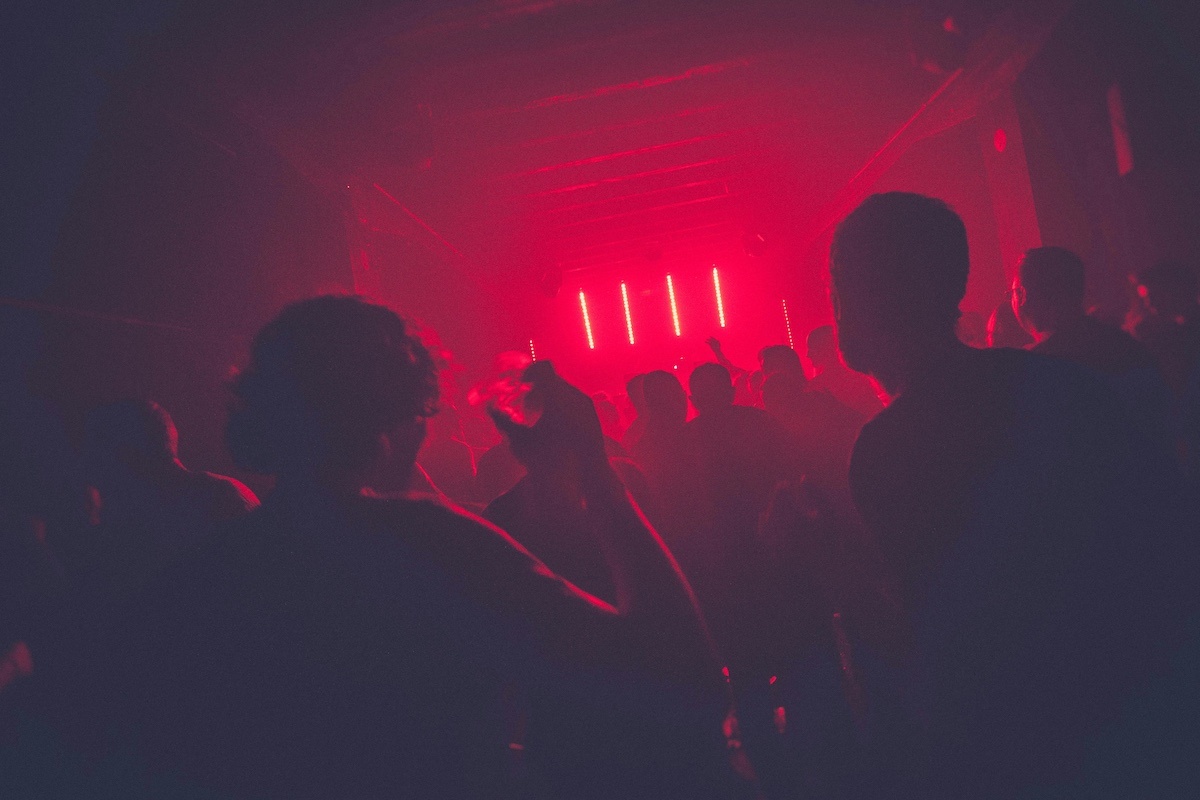
It is 1:15 AM at a basement club on Chicago’s Milwaukee Avenue, and the log-drum is doing what it’s meant to, hitting just a smidge before anticipated, landing slightly harder than the room is ready for.
Amapiano has formally arrived in the American Midwest. Events billed under the genre are regular fixtures on Chicago’s nightlife calendar. It shows up in DJ sets from Masada in Logan Square to Bassline & Bar22 in the South Loop. On social media, Amapiano dance tutorials circulate with the frictionless velocity typical of content simultaneously easy to fake yet hard to fully embody.
@aja_is_saxy Amapiano tutorial for beginners #ajaissaxy #dance #dancetutorial #viral #amapiano #danceteacher ♬ original sound – Hinade🦅
The influencers who post them could not, most of them anyway, find Gauteng on a map. They can, however, do a mean shoulder roll.
Why Amapiano?
With its tempo pegged somewhere between 110 and 115 BPM, Amapiano inhabits an unhurried range. Producers across Gauteng’s townships settled into the form through the early and mid-2010s, in kitchens and bedrooms spread across Pretoria, Alexandra, and Katlehong. Rooms that went dark for eight hours a day because Eskom couldn’t keep the lights on.
The genre gained recognisable form around 2016. Besides emerging from darkness, Amapiano built in a few other (older) things too. Kwaito’s slow-burn groove, township jazz’s patience. Winston “Mankunku” Ngozi’s “Yakhal’ Inkomo,” for example. One of the greatest songs to ever emerge from South Africa.
The question, in a well-lit Chicago club in 2026, is whether any of that came with it. Music has always traveled faster than its context. But Amapiano is a special case, not because it’s unusually complex or fragile, but because the terrain it left behind is unusually specific, somewhat political, and extraordinarily nuanced.
More than a vibe
Amapiano emerged from a very particular post-apartheid geography of Pretoria townships, Johannesburg shebeen culture, and the taxi rank as distribution network. It encodes a set of social facts about aspiration, mobility, and pleasure under material constraint.
The log-drum, more than a sonic signature, is an exercise in rhythmic minimalism developed in rooms where equipment was limited but invention wasn’t. The vocal samples, often pitched, chopped, and looped from old maskandi or gospel recordings function as references. They locate the listener in a lineage that stretches back to kwaito, through bubblegum, and mbaqanga, each genre itself a negotiation between Black South African creativity and economic structures that sought to contain it.
Juxtaposed with high-calorie American expectations, Amapiano feels supremely intentional.
The genre, known for its “dark and moody” atmosphere and bass-driven sounds, is best encountered in late-night, frequently dark, intimate, or moody club environments. In Chicago, by contrast, it plays under fifty-thousand-dollar (nearly R840,000) lighting rigs. Not everything, it seems, crossed the Atlantic.
Music as infrastructure
The genre emerged in the townships of Gauteng in the early 2010s, developing in parallel with South Africa’s escalating electricity crisis. Load-shedding, the rolling programme of scheduled blackouts, a consequence of decades of deferred maintenance at the state utility Eskom, became a fixture of South African life.
By 2022 and 2023, Stage 6 load-shedding implied up to twelve or more hours without power per day for millions of households. The music, however, prevailed. Over battery-powered speakers and laptops running on backup power. From cars, to parks, to any space where the grid’s failure was, at least for a while, irrelevant.
Amapiano’s characteristic sonic languidness, soaking in a groove for minutes at a time, draws on Kwaito’s deep-tempo inheritance and a lounge-jazz aesthetic that prizes space over density. It is the way the music defers the drop and builds tension through repetition rather than escalation.
Load-shedding didn’t invent that patience. But it tested and confirmed it, bestowing a social purpose the music’s earliest listeners understood without being told. A genre that survived interrupted time carries survival somewhere in its structure. The log-drum’s hypnotic loop is, among other things, evidence of that. Sure, cut the power. The pattern will continue.
The African Union’s 2026 Media Fellowship, launched in March 2026 to fund journalists covering African narratives for global audiences, frames this dynamic explicitly. The fellowship’s stated goal is to ensure that Africa’s cultural exports are accompanied by the context that produced them—that the world’s growing appetite for African music, film, and fashion does not simply extract the aesthetic while leaving the political reality behind. That is a reasonable institutional aspiration. Whether it is achievable in the attention economy is a different question.
The Chicago parallel
Chicago knows this dynamic. The city is the birthplace of house music, after all, a genre that emerged from the Black and Latino communities of the South and West Sides in the early 1980s (roughly 1983–1984) in the specific social context of deindustrialization, the death of disco, and an escalating AIDS crisis.
By the mid-80s, House travelled to Europe before returning to America as EDM, a mostly white, mostly suburban phenomenon that retained robust BPM but dropped the genealogy.
Though rarely used at the time, the process had a name: cultural laundering. Communities that built House watched it go global in a form that no longer referenced them. The process mirrors, and sometimes contributes to, the gentrification or commodification of artistic movements, where the “vibe” survives while “social conditions” are conveniently Omo’d away.
The question worth asking in a Milwaukee Avenue basement in March 2026 is whether Amapiano is forty years behind House music on the same trajectory or whether conditions have changed enough to produce a different outcome.
Are we doing to South Africa in 2026 what we did to Chicago’s South Side in 1986? The answer is more than just a shoulder roll.
The ownership fight
South African artists are not passive in this. Kabza De Small and DJ Maphorisa, two of the genre’s primary architects, have spent the last several years building touring operations and international partnerships specifically designed to ensure that the money generated by Amapiano’s global popularity flows back to Johannesburg rather than to labels in London and Los Angeles.
Kelvin Momo, one of the most compositionally sophisticated figures in the scene, has been explicit in interviews about the need to maintain creative control over a sound that international platforms are eager to flatten into a brand. Also, despite being an Amapiano heavyweight, Momo admitted to @Mandz.Not.Hot that he doesn’t actually listen to the genre.
The mechanism they’re all relying on is presence: touring, live performance, and insisting the audience sees the face behind the log-drum. It’s the opposite of algorithmic distribution, which is indifferent to biography. Spotify and TikTok are made for spreading a sound. They are also structurally indifferent to whether a listener understands anything about the place or people that made the groove. South Africa’s Amapiano artists are betting that visibility will do what the algorithm cannot: deliver context.
Whereto now?
Whether visibility pays off depends partly on audiences who are currently doing the shoulder roll without much curiosity about the conditions that produced it. Chicago’s club scene, historically sophisticated about genre politics and shaped by the memory of what happened to House, might be the right place to have that conversation.
Amapiano’s global success is real, and it’s a genuine achievement for South African creative culture. But success in the attention economy is not the same as sovereignty over your own sound. The log-drum is a heartbeat. Specific, historical, carrying Kwaito and township jazz and eight-hour blackouts inside a single groove. Treat it like a ringtone, and you won’t have appreciated the music. You just stole the signal.