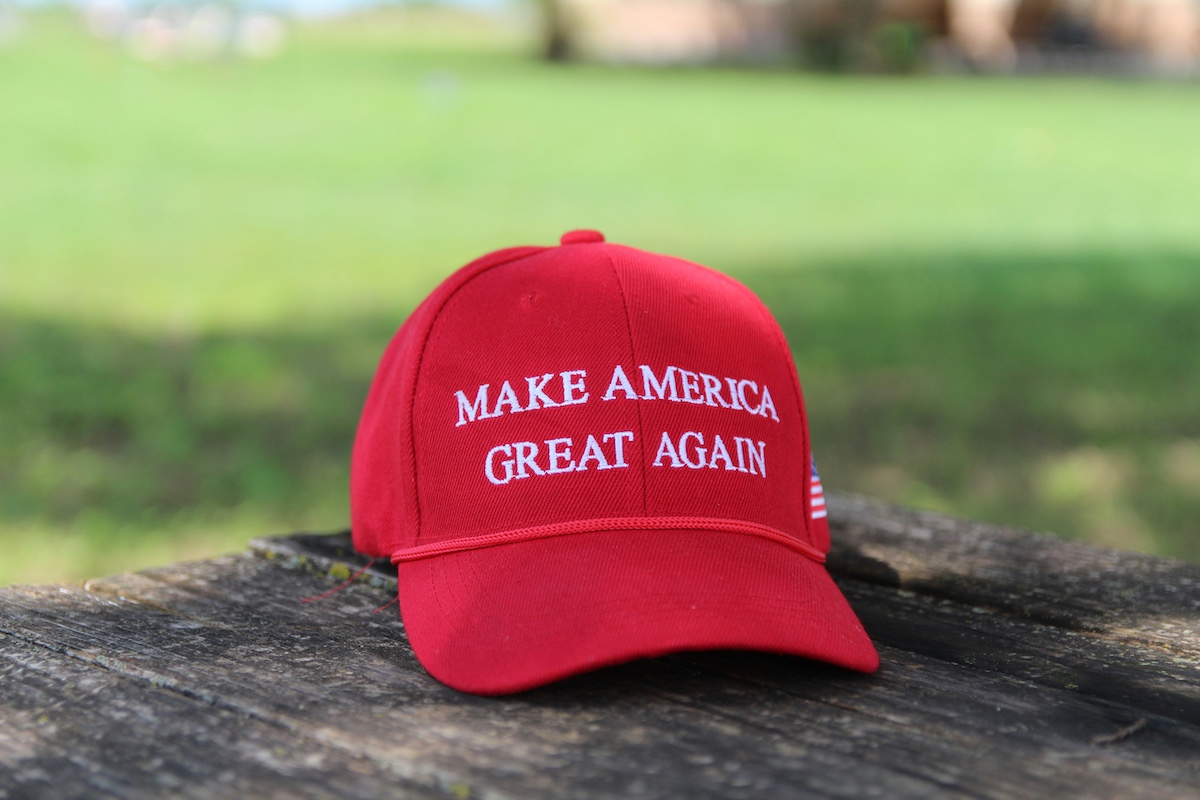
The internationalisation of MAGA
Ambassador Bozell told a room of South African business leaders he doesn’t care what their courts say. He was not speaking as a diplomat. He was performing for an audience six thousand miles away.

On March 10, at a BizNews conference in Hermanus, Leo Brent Bozell III, the United States Ambassador to South Africa, in the post for less than a month nogal, delivered a line that may just define his tenure.
Referring to the Constitutional Court’s ruling that the struggle chant “Kill the Boer” constitutes protected speech in its historical context, Bozell told the room: “I am sorry, I don’t care what your courts say, it’s hate speech.”
Let’s pause on the architecture of that sentence. An ambassador of the country that has spent eighty years insisting an independent judiciary is the cornerstone of democratic governance told a sovereign nation’s business community that he does not care what its highest court has decided. Bozell wasn’t misquoted. He said the quiet bit into a microphone, in a room full of people. In other words, he meant it.
It irks so much because it reeks so heavily of diplomatic narcissism. It assumes that American domestic conviction outranks foreign jurisprudence.
Fallout
The response was brisk and predictable. By Wednesday, South Africa’s Department of International Relations and Cooperation (DIRCO) had formally summoned Bozell for a démarche, a high-level diplomatic reprimand one step short of expulsion. Minister Ronald Lamola called the remarks “undiplomatic” and an affront to South African sovereignty.
DIRCO Director-General, Zane Dangor, confirmed that Bozell, in the meeting, expressed regret that his comments had “detracted from any impression that he wanted to work with us constructively.” But the cat was out of the bag.
ANC Secretary-General Fikile Mbalula announced that South Africa would not be “dictated to” by a foreign envoy and labelled Bozell “an unrepentant racist.” The Economic Freedom Fighters demanded Bozell be declared persona non grata and removed from the country.
Retreat
Then came the gymnastics. Late Wednesday night, Bozell posted a clarification on X, attempting to distinguish between his “personal view” and official U.S. government policy. The U.S. government, he now felt, respects the independence of the South African judiciary.
Thanks to @BizNewsCOM for hosting me yesterday. I want to clarify that while my personal view—like that of many South Africans—is that “Kill the Boer” constitutes hate speech, the U.S. government respects the independence and findings of South Africa’s judiciary.
— U.S. Ambassador to the Republic of South Africa (@USAmbRSA) March 11, 2026
Xola Nqola, chairperson of Parliament’s Portfolio Committee on Justice and Constitutional Development, dispensed with this defence in a single observation: an ambassador cannot toggle his credentials on and off. “It is not acceptable for the Ambassador to say that this was said in his personal capacity and not on behalf of the US government,” Nqola said. “He is here representing his country.”
Nqola is, of course, correct. And the backtrack, far from containing any damage, confirmed the worst interpretation of the original remark: that the Trump administration dispatched to Pretoria a diplomat whose instinct, under no pressure at all, is to publicly cause doubts on the rulings of South Africa’s Constitutional Court. The clarification did not undo the statement. If anything, it suggested the extent to which the statement reflected the man.
The five demands
To understand why this matters beyond the immediate diplomatic bruising, consider what Bozell also confirmed at Hermanus: that the Trump administration’s five formal demands on South Africa remain fully in force. According to reporting by TimesLIVE and confirmed by Dangor, these demands emerged in the context of trade-related discussions and amount to the following:
First, South Africa must formally condemn the “Kill the Boer” chant and prioritise farm murders. Second, it must distance itself from Iran and revise its strategic relationships with Washington’s adversaries. Third: drop its International Court of Justice genocide case against Israel. Fourth, it must revise its Broad-Based Black Economic Empowerment legislation, which Bozell at Hermanus characterised as “apartheid-like.” Lastly, South Africa must reverse its land expropriation policies under the Expropriation Act.
While these requirements were delivered with the weight of an ultimatum at Hermanus, Dangor later clarified that they were communicated during informal trade-related discussions rather than through a formal diplomatic note verbale.
The delivery matters
This distinction is critical; it suggests the Trump administration is using an “informal” channel to test the waters for radical policy shifts without yet committing to a permanent rupture in the formal state-to-state record. It allows the Ambassador to perform for his domestic US base while maintaining a thin layer of technical deniability in Pretoria.
Nqola’s committee rejected the “apartheid-like” characterisation directly. “These policies are constitutional measures intended to address the structural and economic scars left by centuries of racial dispossession,” he said.
These are not the demands of a state pursuing coherent strategic interests in a G20 partner. Three distinct lobbying ecosystems assembled this wish list: the Afrikaner diaspora and groups like AfriForum, which spent the past year lobbying Washington on farm murders and BEE; the Israel policy network; and the domestic anti-BEE business lobby.
Bundled together and presented as American foreign policy, they read less like statecraft than a donor call sheet.
Context: Ramaphosa, the NYT, and a very busy week
Bozell’s remarks did not arrive in a vacuum. Five days earlier, on 5 March, President Cyril Ramaphosa had given a rare interview to the New York Times in which he described Trump’s Afrikaner refugee policy as “racist” and called the American president “truly uninformed.”
Ramaphosa recounted the May 2025 Oval Office meeting in which Trump had presented him with stacks of articles, some unrelated to South Africa, and a video purporting to show dead white farmers that Reuters later traced to the Democratic Republic of Congo.
Bozell referenced this interview at Hermanus, claiming Ramaphosa had “insulted” Trump. According to Dangor, Bozell acknowledged during the démarche meeting that he regretted making this claim. But the sequence matters. The NYT interview gave Bozell a pretext to escalate, and escalate he did, warning that Trump was “losing patience” with Pretoria.
South Africa has not had an ambassador in Washington since the Trump administration expelled Ebrahim Rasool in March 2025. The relationship was already in intensive care. Bozell chose to further fiddle with the ventilator.
The AGOA dimension
The strategic recklessness of it all becomes concrete when you look at the economics. South Africa is the largest non-crude-oil beneficiary of the African Growth and Opportunity Act (AGOA.) In 2024, passenger vehicles and parts accounted for 64 per cent of its AGOA-eligible exports. The programme was extended for one year through December 2026 after Trump signed the reauthorisation on February 3.
But the extension is hollowed out: AGOA preferences do not override the 30 per cent reciprocal tariffs Trump imposed on South African exports in August 2025, nor the replacement 15 per cent surcharge imposed in February 2026 after the U.S. Supreme Court struck down the original tariff regime.
U.S. Trade Representative Jamieson Greer has called South Africa a “unique problem” for American trade officials and told a Senate subcommittee he was “happy to consider” removing the country from AGOA altogether. A “graceful” renewal, one that serves both parties and keeps Pretoria economically tethered to the West, required, at minimum, the appearance of a functional bilateral relationship. Bozell has made that appearance impossible.
Any South African government official seen to cooperate with Washington in the aftermath of the “I don’t care” remark is handing a weapon to domestic opponents. The political cost of constructive engagement has been raised, artificially and unnecessarily, by an ambassador who had been in country for a matter of weeks. The EFF and MK Party now have a quote they will deploy in every anti-Western speech for the next decade.
The Personal-Official Fiction
Bozell’s attempt to draw a line between his “personal view” and the official U.S. government position invites some scrutiny. It is a fiction American diplomacy has never tolerated from other countries’ envoys. In his post, Bozell attempted a most delicate semantic split: he maintained his stance that the chant is “hate speech” as a matter of personal conviction, while simultaneously asserting that the U.S. government “respects the independence” of the South African judiciary.
This distinction is the pivot point of the fiction. By separating his moral judgment from his state function, Bozell ignored a fundamental reality. An Ambassador cannot decouple personal “conviction” from the “policy” they are sent to enact.
To hold both positions is to tell the host nation that the U.S. respects their courts only as a matter of protocol, while the man leading the mission views their legal foundations as morally bankrupt. The standard is clear. When you speak from an ambassadorial platform, at an official event, into a microphone, you speak for the state. There is no personal-capacity toggle.
The EFF’s Nqobile Mhlongo wrote to the Speaker of Parliament demanding that the International Relations Committee convene an urgent session to examine how Bozell’s credentials were approved in the first place. That question will linger. Bozell’s background as a conservative media activist, not a diplomat, was known before he arrived. His 1987 letter opposing South African liberation movements was in the public record. The confirmation was a choice, and the performance at Hermanus was the predictable consequence of that choice.
The Real Story
In an ideal world there’s a version of American engagement with South Africa that would better serve American interests. For example, it would treat Pretoria as a pivotal mid-power on a strategically important continent. It would offer AGOA as an anchor for long-term economic alignment. And push back on genuine policy disagreements through private channels. Oh, and engage the complexity of post-apartheid politics with the patience that complexity demands.
Maybe, it would send an ambassador who understands that his job is to advance American interests in South Africa. Someone less bent on performing American conservative identity politics for a domestic base that will never visit Hermanus.
But. That version of American foreign policy requires a state that thinks beyond the next news cycle. Instead, the current administration operates a performative state. It swaps the disciplined calculation of strategic interest for theatrical bursts of cultural contempt, exporting a performance that sacrifices the very interests it should protect.”
And no, South African courts did not change. American credibility did.