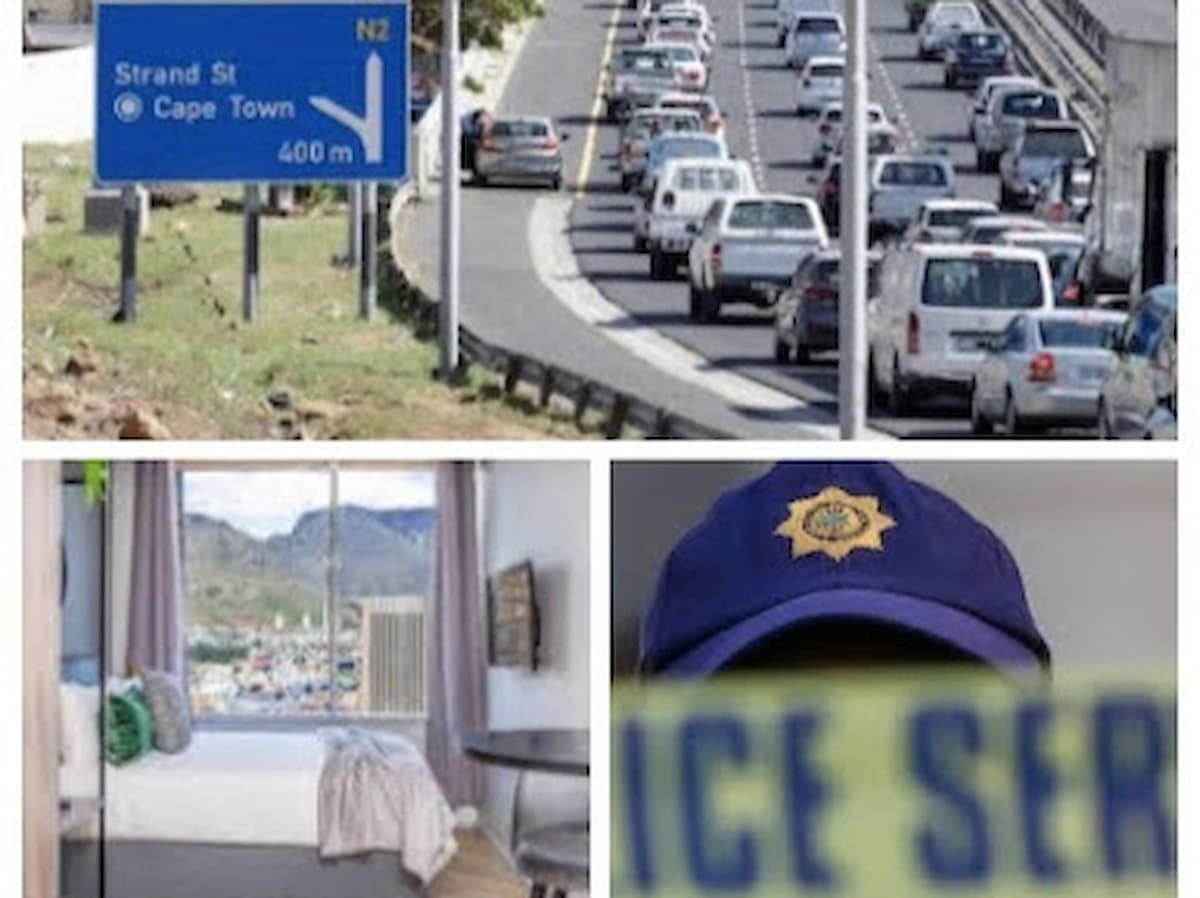
Cape Town: Where you’ll dodge bullets and gridlock just to pay a R15 000 rent for a ‘shoebox’
Cape Town is arguably the best place in SA to find a job, provided you can afford the ‘entry fee’ of a lifestyle that most of its citizens will never touch.

Cape Town, the glistening jewel of South African tourism, is currently undergoing a brutal identity crisis as residents choose between losing four days a year to traffic or becoming a statistic in the country’s murder capital.
The Mother City remains a “two-speed” market, functioning as a high-end playground for international digital nomads and the credentialed elite while the local workforce is pushed behind a “rental wall” to the outskirts.
While the Western Cape boasts the lowest unemployment rate in South Africa at 18.1%, the economic barrier to entry has never been higher for those without the right background or credentials.
Cape Town cost-of-living crisis
The 96-hour ‘Traffic Tax’
If you are commuting into the city, prepare to pay with your time. According to the INRIX 2025 Global Traffic Scorecard, Cape Town is the 6th most congested city in the world, rivalling the gridlock of New York and Mexico City.
Drivers in the metro lost an average of 96 hours sitting in gridlock in 2025, an increase from the 94 hours recorded the previous year. For the average worker, this represents four full days of their lives vanished into a “stop-start cost” that the city’s aging infrastructure is struggling to support.
The Rental Wall: R15 000 for a room in Cape Town
Even if you survive the commute, living near your workplace is becoming a mathematical impossibility. While national inflation hovers around 4.5%, rental spikes in Cape Town hubs like Sea Point and the City Bowl have hit nearly 30% year-on-year.
The average rent for a one-bedroom apartment in the city centre now sits between R14 000 and R19 000. For a middle-class household earning a median income of R14 100, housing costs have decoupled from reality.
Average Monthly Rental Costs in Cape Town (January 2026)
| Neighbourhood | 1-Bedroom Apartment | 2-Bedroom Apartment |
|---|---|---|
| City Bowl / Foreshore | R14 000 – R19 000 | R25 000 – R32 000 |
| Atlantic Seaboard | R18 000 – R25 000 | R35 000 – R55 000 |
| Southern Suburbs | R10 000 – R14 000 | R16 000 – R22 000 |
| Northern Suburbs | R8 500 – R11 000 | R13 000 – R17 000 |
In December 2025, Cape Town Mayor Geordin Hill-Lewis remained firm in his rejection of rent control, calling the proposal a “really bad idea” that would shrink housing supply. However, activists argue that the 26 000 active Airbnb units in the city are “turbo-charging” displacement, as property owners can earn a month’s rent in just one week during peak season.
Cape Town, South Africa’s Murder Capital
While the wealthy occupy the Atlantic Seaboard, the Cape Flats continue to bleed. The third quarter crime statistics for 2025, released on 20 February 2026, paint a grim picture: the top five police stations for murder in South Africa are almost entirely concentrated in the Cape Town district.
Mfuleni retains its position as the national murder capital with 75 murders in just three months, followed closely by Nyanga at 70. Additionally, gang-related murders are overwhelmingly a Western Cape crisis, accounting for 257 of the 276 sampled cases nationally.
Beyond murder, the city is a hotspot for contact crimes. Mfuleni also leads South Africa in common assault (531 cases), while Cape Town Central remains a primary target for common robbery.
The Credentialed Playground
Despite the blood and the traffic, the city remains an economic anomaly. While immigrants spend the least nationally, in Cape Town, immigrant-headed households record a staggering average consumption expenditure of R259 000 – significantly higher than South African-born residents in the same area.
Statistics South Africa data reveals that this expenditure gap highlights a city that has flipped the national rule. Cape Town is structured for those with the credentials to enter the elite workforce – predominantly white men and high-earning expats – while the people who build, clean, and run the city are increasingly forced into a three-hour daily commute just to survive.
As semi-gration from Gauteng continues to account for 48% of all inter-provincial moves, the pressure on supply is unlikely to ease. Cape Town is at a crossroads: it is arguably the best place in South Africa to find a job, provided you can afford the “entry fee” of a lifestyle that most of its citizens will never touch.