US immigration enforcement crisis: What Minneapolis revealed
The US immigration enforcement crisis came into focus in Minneapolis, where ICE operations, political theatre, and deadly force collided.

Hidden below adverts for Valentine’s chocolates, a headline caught my eye. The Free Press published an investigation revealing that the US immigration enforcement crisis has a face nobody in Washington wants to discuss.
Afrikaner “refugees”, fast-tracked into America under US President Donald Trump’s refugee prioritisation programme, are living in cockroach-infested motels, eating one meal a day.
They trudge miles through snow without warm clothing to reach grocery stores. Some describe their new American reality as worse than what they left behind. Ag shame, I thought.
But then the irony started gnawing. Along with a sense of disbelief at current hypocrisy levels.
You see, since taking office, the Trump administration has championed white South African arrivals as victims of “unjust racial discrimination”. It’s a characterisation South African authorities dispute as misinformation.
It simultaneously deployed thousands of federal agents to Los Angeles, Washington D.C., Portland, Chicago, and Minneapolis to support immigration enforcement and crime-reduction initiatives. Officials called it “the largest immigration enforcement operation ever carried out”.
On 12 February 2026, US border czar Tom Homan announced the end of Minneapolis’s “Operation Metro Surge”, spinning more than 4,000 arrests as vindication of a deployment that can only be described as heavy-handed. It was his “mission accomplished” moment. And a case of spectacular political self-immolation.
The contrast in views on refugees, sanctuary, and when welcome mats get rolled up reveals something fundamental. Immigration policy has become less about coherent governance than political theatre. A performance that extracts human cost while delivering negligible practical results.
US immigration enforcement crisis the numbers: the arithmetic of failure
The administration’s aggressive goal, set in May 2025, was 3,000 immigration arrests daily across the entire nation. That equates to more than a million a year. Operation Metro Surge kicked off in December 2025, eventually deploying approximately 3,000 federal agents to Minnesota.
Now, indulge me and consider that number. Minnesota’s KPI seems, well, like underperformance: the operation yielded roughly one arrest per day for every fifty officers on the ground.
The return on investment, and I’m no numbers guy, seems extraordinarily lacking. What the White House gained, however, is far bigger. It has achieved near-total erosion of credibility on immigration outside the narrowest confines of the most rabid Republican base, with even parts of that core showing signs of strain.
Two deaths that defined the US immigration enforcement crisis
On 7 January, Immigration and Customs Enforcement (ICE) agent Jonathan Ross fatally shot Renée Nicole Macklin Good, a 37-year-old American citizen, as she sat in her car on a Minneapolis street. Video footage contradicts official claims that she had weaponised her vehicle.
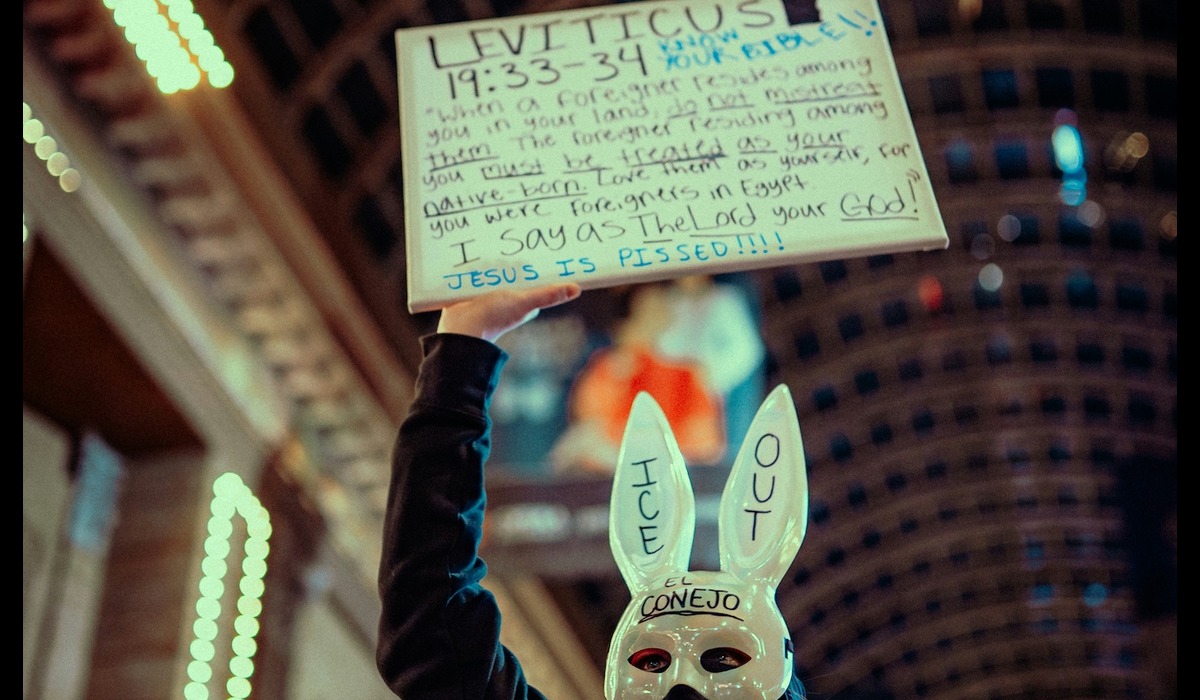
“ICE, get the f*** out of Minneapolis,” said Mayor Jacob Frey in response, adding that Minneapolis does not want ICE there. “Your stated purpose for being in this City is to create some kind of safety, but you are doing exactly the opposite.”
Seventeen days later, on 24 January, Border Patrol agents shot and killed Alex Jeffrey Pretti, a 37-year-old intensive care nurse at a Veterans Affairs hospital. Pretti was filming federal agents with his phone, attempting to protect a woman pushed to the ground by an agent.
Multiple ICE agents surrounded him. He was pepper-sprayed, wrestled down, then shot multiple times.
Both victims were US citizens. Medical examiners ruled their deaths homicides. In each case, video footage surfaced that challenged the government’s initial account of events. The shootings occurred less than two miles apart.
These killings transcend glib statistical analysis. They represent a moment when the federal immigration enforcement crackdown crossed a threshold that even some supporters of strict immigration policy find indefensible.
Political reckoning: how the immigration enforcement crisis changed the map
The backlash has been swift and measurable. By 11 February, Trump’s overall approval rating had fallen to 39% according to NBC News polling. The lowest point of his second term.
The same poll revealed that his approval on immigration, once his political strength, had hit 40%, with a 60% disapproval rating.
About 6 in 10 independents now say Trump has “gone too far” with deportation efforts. Independent approval for Trump’s immigration policies fell from 37% in March 2025 to 23% by February 2026. That shift matters because it signals critical decline in support among key swing voters.
For Democrats, these numbers have transformed the political landscape. While they were already favoured to retake the House in November’s midterms, the Senate, which seemed out of reach, now appears genuinely competitive.
The Cook Political Report notes that Democrats are “undeniably entering 2026 with a better chance of retaking the Senate than they were at the outset of the year”, though they remain underdogs needing to flip four seats.
Shutdown as performance art
The political crisis produced a government shutdown, or more precisely, a theatrical production about one. At midnight on Friday the thirteenth, funding for the Department of Homeland Security expired after Congress passed spending bills for other agencies but settled for a stopgap measure for DHS.
Democrats are demanding immigration enforcement reforms as a condition of funding: agents operating unmasked, showing identification, obtaining judicial warrants for home entries, and avoiding sensitive locations like schools and churches.
Republicans have largely rejected these guardrails, some demanding crackdowns on sanctuary cities in exchange.
The standoff is largely performative. ICE and Customs and Border Protection (CBP) remain “flush with more than $70 billion [approximately R1.13 trillion] in prior funding” from earlier legislation, meaning enforcement operations continue unabated.
Acting ICE director Todd Lyons testified that the shutdown would not significantly impact operations. The message is unambiguous: for this administration, power proceeds uninterrupted. Oversight is optional.
Federalism, sanctuary, and the ICE operations crisis on the street
At the heart of this immigration enforcement crisis lies a tension between federal authority and what Republicans derisively call “sanctuary” policies. These vary by jurisdiction but generally restrict local cooperation with certain federal immigration enforcement actions.
Republican lawmakers blamed sanctuary policies for the chaos in Minnesota, arguing that enforcement would have been more surgical and safer if local authorities had handed over undocumented individuals from jails. Instead, they claim, federal agents were forced onto streets.
During their congressional testimony on 10 February, Lyons and CBP commissioner Rodney Scott cited sanctuary policies as contributing factors in operational breakdowns.
“People are simply making valid observations about your tactics, which are un-American and outright fascist,” Rep. Dan Goldman, a New York Democrat, told them. “If you don’t want to be called a fascist regime or secret police, then stop acting like one.”
When federal immigration law is enforced professionally (and proportionately), it makes sense for mayors and governors to cooperate. To a certain extent. They may even give assistance when removing dangerous individuals from their communities.
But deploying thousands of federal agents as partisan political theatre fundamentally alters the equation. Sanctuary policies become not an obstacle to good governance, but a necessary check on the abuse of power.
Viewed from elsewhere
For those of us who have navigated immigration systems from the other side, the lessons from Minnesota are instructive. Whether as applicants to controversial refugee programmes, or simply as people who understand that immigration policy requires both humanity and clear-eyed assessment of national interests, we recognise the pattern.
We know how nations use migration as a proving ground for authoritarian impulses. We’ve seen how enforcement without legitimacy is simply coercion, how credibility once lost is extraordinarily difficult to rebuild.
We know from watching our own regions how countries like Eswatini have been pressured, and financially rewarded, to accept US deportees as part of diplomatic arrangements.
The debate is not about whether to enforce immigration law. It is about the methods, the actors, the limits, and the purpose behind that enforcement.
What the US immigration enforcement crisis leaves behind
The images from Minneapolis will outlast any short-term political calculations. Federal agents in tactical gear confronting protesters. Two American citizens dead. A community in turmoil. Over a dozen federal prosecutors resigning in protest. Articles of impeachment introduced against DHS Secretary Kristi Noem with 140 Democratic co-sponsors.
Meanwhile, the Trump administration marketed Afrikaner refugees as evidence of compassion. Housing them in squalor proved that their concept of sanctuary is purely performative.
The shutdown will end. Midterms will arrive, and voters will render judgment. But the damage to the administration’s credibility on immigration may prove lasting. Not because Americans oppose immigration enforcement, indeed polling suggests significant support for border security.
What the Minnesota operation exposed was ICE activity untethered from any coherent policy objective and deployed mainly for political effect. It continued even after it became clear that the human and political costs far exceeded any practical gain.
The question now is whether American democracy’s institutional guardrails prove strong enough to contain the damage. November will deliver the verdict.
Voters will remember Minneapolis, where the state wielded power without restraint, killed its own citizens, then shut down the government to dodge reform.
That referendum will determine not just which party controls Congress, but what kind of country America chooses to be when cameras stop rolling. And masked agents go home.